




A coupler that keeps failing on the same breaker is rarely a bad part. Most often it is the wrong connection for the job. Hydraulic hammers send thousands of pressure spikes through the auxiliary circuit every shift, and a ball-locking quick coupler absorbs each one at a handful of small contact points. Over time those points dent, the connection loosens, and the coupler starts to weep. Replacing it with the same part restarts the cycle. Stucchi looks beyond the part number to understand the application and solve the operating problem. On breaker circuits, that problem usually has a name: brinelling.
What Brinelling Looks Like on a Quick Coupler
Brinelling shows up in the field long before anyone calls it by name. Watch for these signs on hammer, breaker and demolition-tool circuits:
- A ring of small dents in the male nipple’s locking groove. These are the marks the locking balls leave when they are driven into the groove again and again.
- Play at the connection. A coupler that once seated tight now moves or rocks when the hose is pushed by hand.
- Weeping after a hammer run. Oil film or drips at the joint that were not there when the coupler was new.
- Harder connections and disconnections. Dented grooves and worn balls catch instead of sliding.
- The same coupler, replaced again. A repeat order for one position on one attachment is the clearest sign of all.
What Causes It
Brinelling is the permanent indentation of a hard surface. The term comes from the Brinell hardness test, which measures hardness by pressing a hard ball into a surface and measuring the dent it leaves. In a ball-locking quick coupler, the same thing happens in service.
Each pressure impulse tries to push the two coupler halves apart. The locking balls stop that separation, so the entire force passes through a few small points where the balls meet the groove. One spike leaves no visible mark. Thousands of spikes per shift, week after week, press the balls into the hardened steel until the surface yields and the dents become permanent.
Once the dents form, the damage speeds up. The halves gain axial play, which lets them move against each other with every impulse. That movement wears the seals and sealing faces, and the connection starts to leak. Leaking oil holds grit at the joint, which adds abrasive wear on top of the impact damage.
Why Hammers and Breakers Are the Worst Case
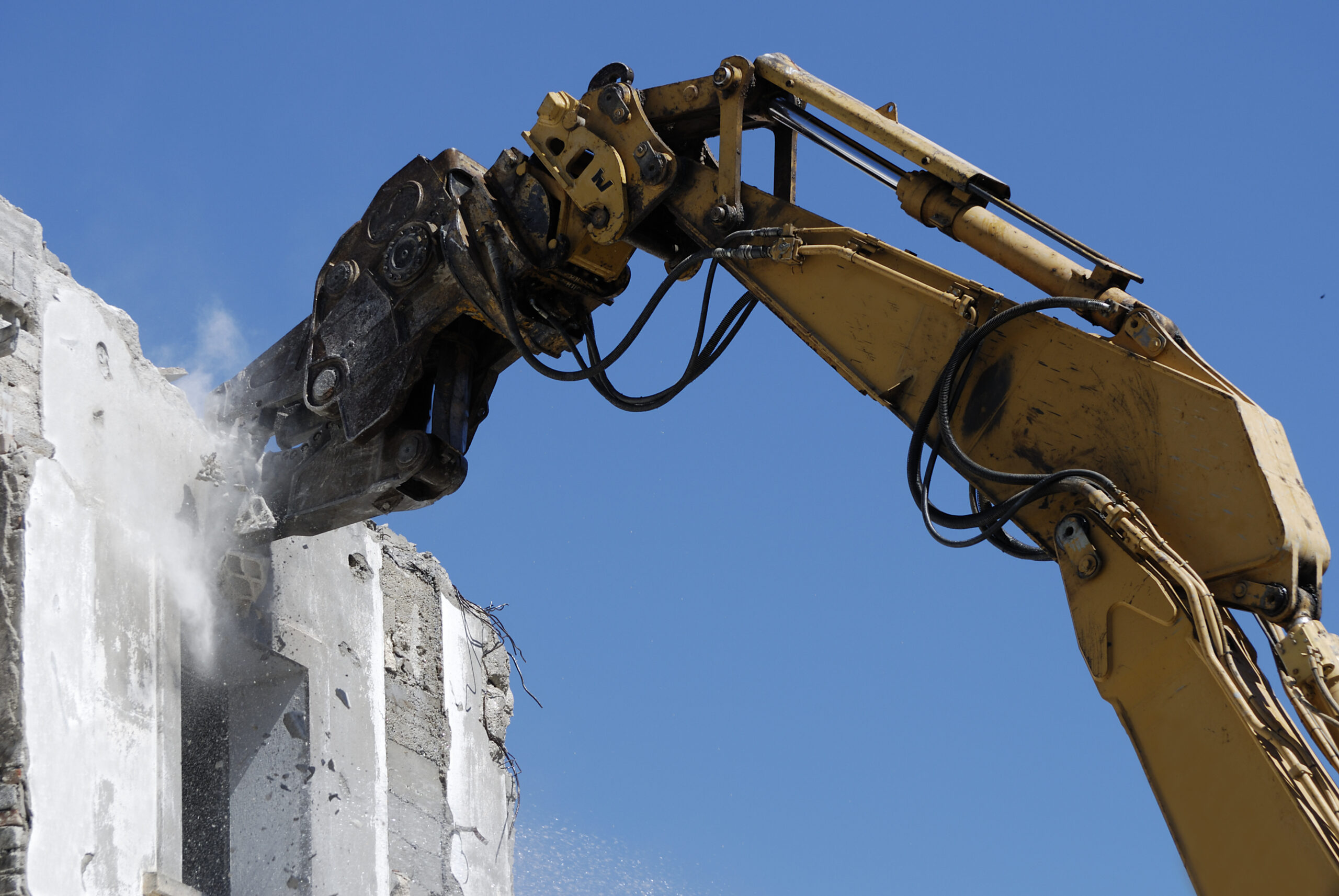
Most hydraulic attachments see occasional pressure peaks. Percussive tools see them continuously. A hammer’s piston cycles at high frequency for as long as the operator holds the trigger, and each blow sends a pulse back through the supply and return lines to the coupler.
Three conditions make breaker circuits especially hard on couplers:
- Impulse frequency. The number of load cycles a coupler sees in a single shift on a hammer can exceed what it sees in months on a bucket or thumb.
- Peaks above the gauge reading. Short spikes often pass before a relief valve fully opens, and dampened gauges do not show them. A coupler can look correctly rated on paper and still see much higher peak loads.
- Frequent changeovers. Breakers are swapped with buckets, crushers and grapples, so the same coupler also takes connection wear, dirt exposure and residual pressure at every change.
Stucchi’s High-Impulse Circuits Application Guide covers why working pressure ratings alone do not predict life in this service.
How to Diagnose It
Brinelling can be confused with other wear. A short inspection separates them:
- Relieve pressure and disconnect following the machine manufacturer’s procedure.
- Clean the male nipple and inspect the locking groove under good light. Evenly spaced dents that match the ball pattern point to brinelling.
- Compare with the mating face. Scoring, nicks or embedded grit on the flat face point to contamination wear instead, which calls for a cleaning and capping fix rather than a new connection type.
- Check the connected joint for axial play. Movement between the halves confirms the locking surfaces are worn.
- Look at the history. If the same position on the same attachment keeps failing while couplers on other attachments last, the duty cycle is the cause, not a defective batch. Stucchi’s article Before You Replace a Hydraulic Coupler, Review the Application covers that review in more detail.
Brinelled surfaces are permanently deformed. New seals may stop a leak for a while, but dented locking surfaces mean the coupler, and often its mate, needs to be replaced.
The Fix: Change How the Coupler Locks
Replacing a brinelled ball-locking coupler with another ball-locking coupler repeats the failure. The lasting fix is a connection that carries the impulse load differently.
A thread-to-connect coupling holds its halves together with a threaded sleeve instead of a ring of balls. The load spreads around the full thread engagement, and the halves are held without the axial play that drives brinelling. Stucchi’s product pages state that the thread-to-connect design eliminates premature wear and brinelling. These couplings also handle the other half of the breaker problem. Select Stucchi connect-under-pressure couplers are designed to connect under residual pressure, and Stucchi’s thread-to-connect series connect with pressure on both sides of the circuit. Stucchi’s Connect Under Pressure guide explains how trapped pressure builds and how each design handles it.
| Series | What it adds | Where it fits on impulse circuits |
|---|---|---|
| VEP | Thread-to-connect flat face across 1/4″ to 2″ | Excavator auxiliary lines for hammers, thumbs, grapples and compactors |
| VEPHD | Higher-grade steel, full QPQ body, wrench flats | Severe-duty hammer, compactor, tamper and demolition circuits |
| VEPHDL | Locking female with visual connection indicator | Heavy-duty circuits with vibration and torsion where a failsafe connection is critical |
| VP | Safety auto-lock sleeve for positive secondary retention | Construction equipment with high pressure or residual-pressure problems |
| VT17-ZN RoT-lock | Automatic locking sleeve, integrated live swivel and axial bearing | Severe impulses with high vibration and hose rotation |
For working pressures, sizes and ports, see the series table in the High-Impulse Circuits Application Guide.
Stucchi has seen this pattern on demolition sites. In Stucchi’s bridge demolition case study, a contractor had a 56-hour window to demolish an interstate bridge in Denver and needed couplers that would hold up through two days of heavy hammering and frequent attachment changeovers. Stucchi specified the VEPHDL heavy-duty, locking threaded coupler, and the contractor finished ahead of schedule with leak-free performance.
When Brinelling Points to a Bigger Problem
A new connection type removes the failure point, but the impulses that caused it are still in the circuit. If brinelling appeared quickly or across several positions, check the rest of the system too:
- Measured peak pressure. A high-frequency transducer or data logger shows the spikes a gauge misses. Compare those peaks with the connected-pair rating of every component in the line.
- Coupler size against actual flow. An undersized coupler adds pressure drop and heat on high-flow hammers. See Stucchi’s guide to Understanding Hydraulic Pressure Drop.
- Relief valve setting and response. Confirm the setting matches the attachment manufacturer’s specification.
- Hose routing. Hoses that whip or twist with every blow add bending and torsion at the coupler.
Preventing Brinelling on the Next Attachment
- Specify by duty, not by port size. Put thread-to-connect couplers on hammer, breaker and demolition circuits from the start.
- Match the series to the movement. Choose a locking or auto-locking sleeve where vibration and torsion are present, and a live swivel where hoses rotate.
- Inspect locking grooves at every service. Dents caught early prevent leaks and unplanned downtime.
- Cap every open half. Dust caps keep grit out of the faces and grooves between changeovers.
- Store attachments on the ground and out of direct sun. This limits the residual pressure that makes the next connection harder.
Frequently Asked Questions
What is brinelling in a hydraulic quick coupler?
Brinelling is permanent denting of hardened surfaces caused by repeated impact loading. In ball-locking quick couplers, pressure impulses drive the locking balls into the male nipple’s groove until they leave indentations, which creates play, wear, and leakage.
Why do quick couplers fail on hydraulic hammers and breakers?
Percussive tools send continuous pressure spikes through the circuit. Ball-locking couplers carry each spike at a few small contact points, so the locking surfaces dent and loosen far faster than on attachments with steady pressure.
Can a brinelled quick coupler be repaired?
Seals can be replaced, but brinelled locking surfaces are permanently deformed. Once the groove is dented and the connection has play, replace the coupler and inspect its mate.
What type of quick coupler resists brinelling?
Thread-to-connect couplings resist brinelling because the threads spread the load around the full engagement and hold the halves without axial play. Stucchi’s VEP, VEPHD, VEPHDL, VP, and VT17-ZN RoT-lock series all use a threaded connection.
Will a higher pressure rating stop brinelling?
Not by itself. A higher-rated ball-locking coupler still carries impulses at the same small contact points. The locking method matters as much as the rating.
Talk to Stucchi About Your Breaker Circuit
If the same coupler keeps failing on the same attachment, the application deserves a closer look. Stucchi USA provides direct North American engineering support with sizing guidance and CAD models.
Send your circuit details to Stucchi’s Technical Help Desk or through the contact form. Include the attachment type, carrier model, operating flow and pressure, and a photo of the worn coupler if you have one. A specialist will review the application and recommend the connection that fits the duty.
