



Hydraulic system design and engineering requires more than identifying the correct quick coupling products, sizes, and port threads. How a connection system performs in the field is based on a range of additional parameters, such as pressure, flow, space constraints, contamination control, and other operational or design factors.
Stucchi’s Engineering Hub provides links to product specifications, including port thread charts and searchable size selection charts. Additional considerations when selecting quick couplings are addressed in the S.T.AM.P. method, and our guides on Pressure Ratings and Hydraulic Pressure Drop explain how to estimate these critical parameters and choose the best pressure-rated coupling for your application.
All Stucchi product pages include pressure drop information and detailed, searchable product parameter specifications. To speak directly to a Stucchi hydraulic engineer, contact us by phone at 847-956-9720, email, start a Chat, or submit a drawing through the Technical Help Desk.
OEM and Engineering Hub for Hydraulic Connection Solutions
Whether you need technical assistance identifying couplings, choosing the right coupler size and/or threads, troubleshooting system leaks and flaws, or designing a prototype hydraulic system, our engineering team is here to support your needs.
Stucchi is your hydraulic system engineering partner, offering hydraulic quick-connect solutions for mobile equipment and industrial machinery across a wide range of industries and applications. We design, engineer, and manufacture fluid power solutions where reliability, safety, and contamination control are critical.
Stucchi: Hydraulic System Engineering and Support
Stucchi engineers work directly with OEMs, equipment distributors, operators, and fleet managers to support the integration of hydraulic connections into new and existing equipment. We assist during the design phase, when engineers are evaluating connection types, space constraints, flow requirements, and pressure ratings. This allows us to provide technical data, CAD models, sizing guidance, and application input to help engineers make informed decisions early in the design process.
During prototyping and production, Stucchi assists with performance considerations, including pressure drop, flow performance, connection under pressure, and multi-coupling system design. For equipment already in the field, Stucchi helps troubleshoot connection problems and improve safety, reliability, and contamination control.
Stucchi hydraulic engineers focus on more than supplying the right components; we help engineers and equipment teams develop hydraulic connection systems that function properly within the equipment, its operating environment, and the way it is used and maintained. This includes standard products, application-specific configurations, and custom-engineered connection solutions when required.
Stucchi’s Approach to Hydraulic System Engineering
Hydraulic connection requirements often change between initial design, prototyping, and real-world operation. As equipment is tested and used in the field, connection requirements may need to be adjusted to address design or performance concerns
Stucchi approaches hydraulic system engineering with a practical, application-driven mindset, working closely within OEM constraints to develop solutions that perform reliably in real-world conditions. During this process, our engineering team reviews the application, tests various sealing options, adjusts configurations, modifies mounting arrangements, and may integrate multi-coupling or custom-designed systems to enhance workflow and serviceability.
When needed, Stucchi disassembles and reassembles components, changes seals, and tests different approaches until the connection system operates safely and consistently. Once the optimal solution is validated, it becomes a standardized, repeatable production design.
The priority throughout this process is straightforward: implement hydraulic connection systems that perform as expected, support uptime, and help the customer succeed in the field. This practical, problem-solving approach is a key reason many equipment manufacturers and hydraulic specialists work with Stucchi during the design and evaluation process.
Why Partner with Stucchi vs. Alternatives
When procurement managers source hydraulic components, they are looking for more than product specifications. Engineering support, the ability to get answers quickly, adapt to real-world constraints, and solve problems during design, testing, and production often has a greater impact on project success than the component itself. This is where Stucchi operates differently from many larger organizations.
We Build a Bridge to the Workflow
A key difference with Stucchi is our approach to working with OEMs and equipment manufacturers. Many larger organizations operate within fixed product structures and internal processes that make it difficult to adjust when an application falls outside standard configurations. If something does not fit their catalog or standard process, the solution is often to redesign the equipment around the component.
Stucchi takes a different approach. The focus is on understanding how the equipment is actually built, assembled, operated, and serviced, and then adapting the connection solution to fit the machine and the workflow.
This often includes reviewing mounting space, hose routing, connection access, residual pressure, service procedures, contamination risks, and how often couplings are connected and disconnected. In some cases, the solution may involve modifying an existing product. In other cases, it may involve a custom mounting arrangement, a multi-coupling system, or a configuration change that makes the system easier to use and service.
The goal is simple: make the hydraulic connection system fit how the equipment works in the real world, not just how it looks on a specification sheet.
What this means for engineers and OEMs:
- Support during design, prototyping, and production
- Help adapting solutions to fit space, performance, and workflow constraints
- Ability to modify or configure existing products
- Custom connection and multi-coupling system development
- Direct access to engineering support and faster response times
- Experience with reliability-critical applications
Accessible Engineering Support and Fast Response
Another difference is accessibility. Engineers working with Stucchi typically work with the same technical contacts throughout a project, from early design through production and field support. This allows for faster communication, better understanding of the application, and quicker problem-solving when issues come up.
Because Stucchi’s engineering and technical teams work closely with customers and with Stucchi’s global engineering resources, questions related to sizing, performance, CAD, troubleshooting, or custom configurations can be addressed quickly. This is especially important during prototype and production phases, where delays can affect project timelines and equipment delivery.
For many OEMs and hydraulic specialists, the value of working with Stucchi is not just the component itself, but having access to engineering support, practical problem solving, and a team that will work through application challenges until a reliable solution is in place.ckly, and works through design and application challenges until a reliable solution is in place.
Hydraulic Engineering Resources for OEMs and Engineers
Stucchi’s Hydraulic Engineering Hub offers a range of technical resources:
Coupler Identification & Sizing
Hydraulic couplers are often replaced or upgraded, but many teams don’t know the exact series or size installed. Identifying the coupler is essential before selecting replacements, ensuring compatibility, or sizing new connections.
Learn more about Stucchi Product Specifications, including:
Product identification charts (new page w/ the Product ID charts from the Tech Help Desk)
Video – Identifying Common Port Threads
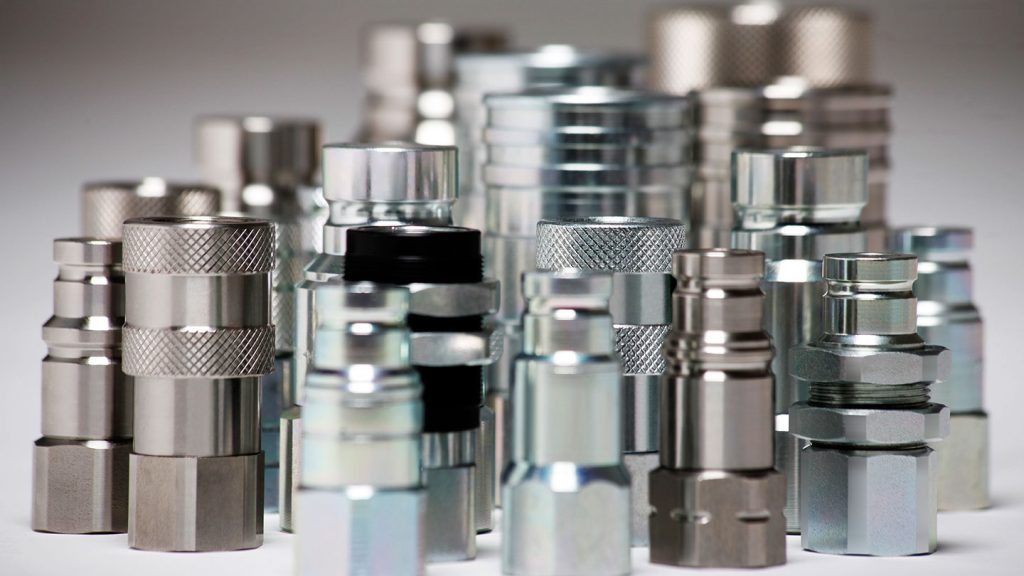
Port thread and sizing identification helps engineers determine what coupler they have and what size is required for their system.
Coupler Selection: The S.T.A.M.P. Method
Selecting the right coupler involves more than size. Use the S.T.A.M.P. method to evaluate the full application.
After identifying the coupler size, proper selection requires evaluating operating conditions and system requirements. The S.T.A.M.P. method is a standard engineering approach used to select hydraulic quick couplings based on Size, Temperature, Application, Materials/Media, and Pressure.
- S – Size: Flow rate & connection size
- T – Temperature: Fluid & ambient temperature
- A – Application: Equipment & duty cycle
- M – Media: Fluid type & compatibility
- P – Pressure: Working & residual pressure
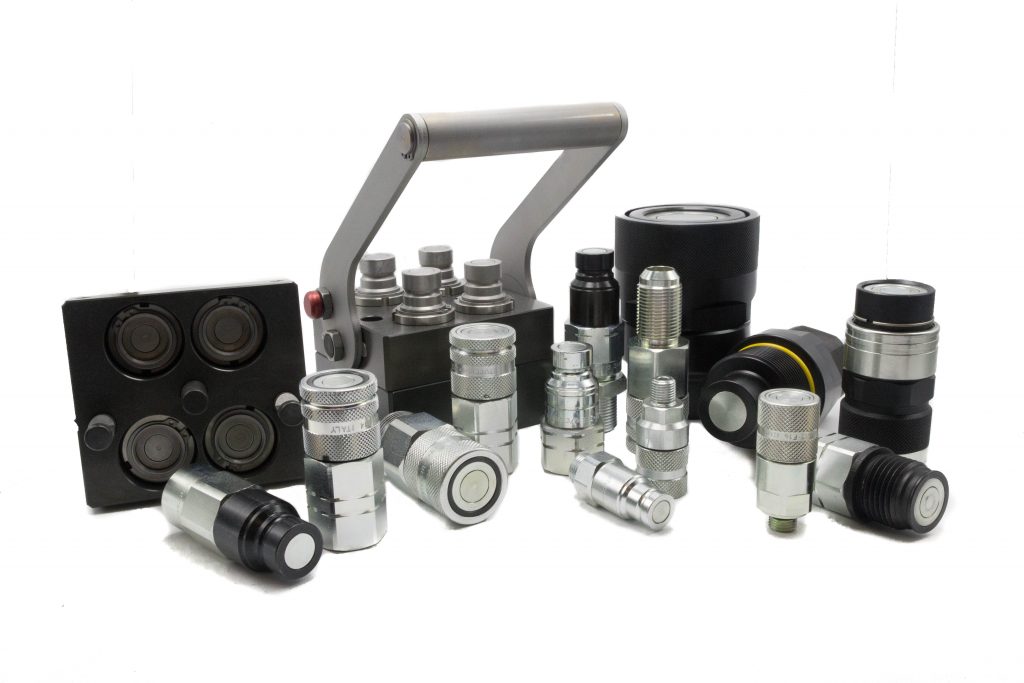
The S.T.A.M.P. Method helps ensure the coupling is compatible, as well as safe, reliable, and suited to the operating environment.
Working and Burst Pressure Ratings
Pressure ratings are one of the most important factors when selecting hydraulic couplers.
- Working pressure is the maximum pressure a component can handle during normal operation.
- Burst pressure is the maximum pressure the component can withstand before failure.
The relationship between these ratings and safety factors, pressure spikes, and connection state (connected or disconnected) affects hydraulic system safety and component life.
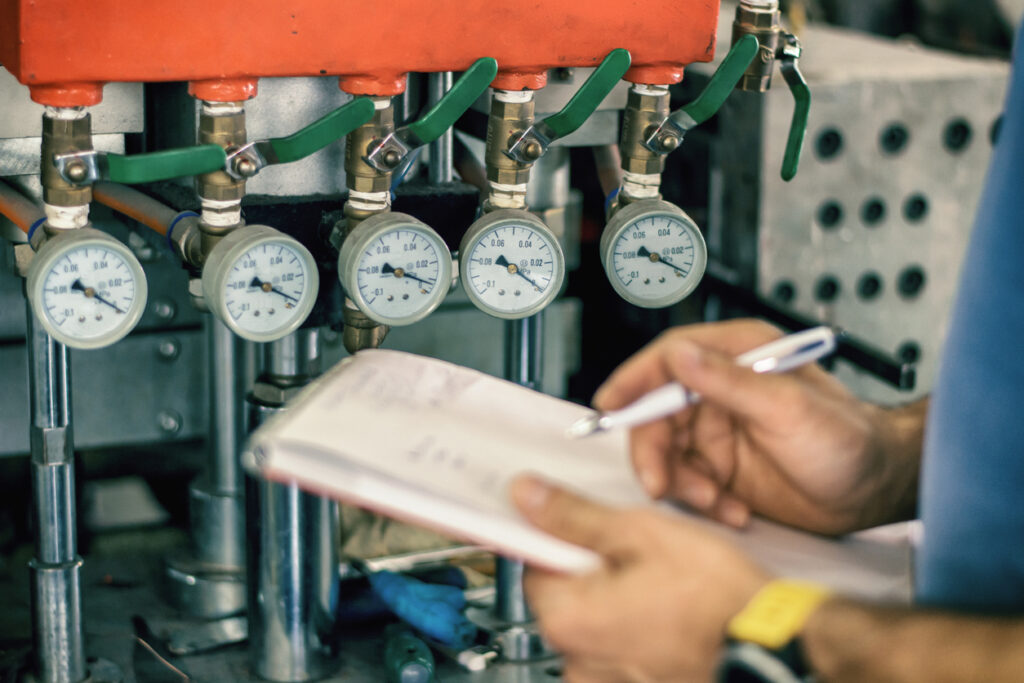
Understanding Working and Burst Pressure Ratingshelps prevent failures, reduce downtime, and match hydraulic components to system conditions.
Hydraulic Pressure Drop
Understand how pressure drop affects hydraulic system performance.
Hydraulic pressure drop is the reduction in fluid pressure as it moves through hoses, fittings, valves, and quick couplers in a hydraulic system. If the pressure drop is too high, equipment can lose efficiency, run hotter, respond slower, and experience increased wear or component failure.
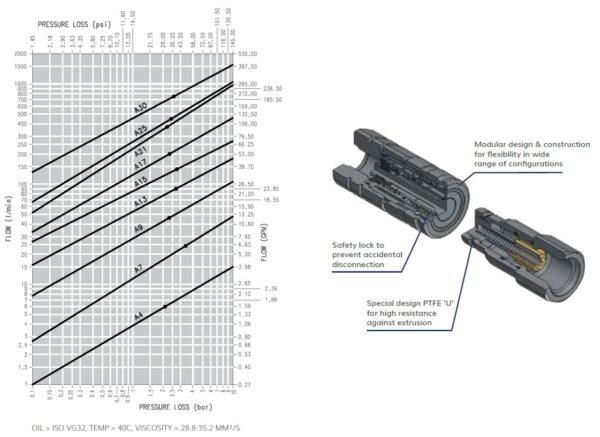
Pressure drop is influenced by factors such as flow rate, hose length and diameter, fluid viscosity, temperature, and internal restrictions within components like quick couplers and adapters. Understanding and Estimating Pressure Drophelps engineers properly size components, prevent performance and reliability issues, and improve efficiency.
Technical Help Desk — Get Help from an Engineer
Upload a photo, request CAD files, or speak with an engineer about your application using our Technical Help Desk Form.
Need help identifying your legacy coupler? Upload a photo and get expert, experienced help in coupler identification and replacement options. For application support, CAD drawings, or technical assistance, we recommend calling or chatting with an engineer. When you need a hydraulic engineer willing to think ‘outside the box’, Stucchi’s hydraulic engineering geeks know couplers like no one else.
StucchiUSA hydraulic engineers draw on decades of experience and vast resources, including Stucchi’s European partner in Italy and a family owned company-history of providing connection engineering solutions dating back more than 65 years.
Contact an engineer for CAD drawings or hydraulic engineering support to get technical data and accurate configurations designed for your equipment and needs.
Safety and Reliability
Reduce fluid loss, contamination, and connection-related failures.
Hydraulic connection performance affects equipment safety, environmental protection, and uptime. Leakage, contamination, connection difficulty, and component failure can lead to downtime, fluid loss, safety risks, and increased maintenance costs. Because of this, hydraulic connections need to be evaluated for compatibility, as well as long-term reliability and safe operation in real working conditions.
Stucchi works with equipment manufacturers and hydraulic specialists to implement connection solutions that reduce fluid loss, limit contamination, improve serviceability, and enable safe connections under pressure. These solutions include flat-face couplings, connect-under-pressure solutions, and multi-coupling systems that help reduce connection errors and improve reliability during equipment operation and maintenance.
Hydraulic Safety & Reliability Solutions
Connection Solutions That Improve Safety and Reliability
Connect-Under-Pressure Couplers
CUP couplers allow hydraulic lines to be safely connected even when residual pressure is present in the system. This helps reduce connection issues, improve operator safety, and prevent equipment downtime due to trapped pressure in hydraulic lines.
Learn more about Connect Under Pressure Hydraulic Couplers.
Multi-Coupling Systems
Multi-plate systems allow multiple hydraulic and electrical lines to be connected simultaneously in a single operation. These systems help reduce connection errors, speed up equipment changeover, improve serviceability, and support safer, more efficient equipment operation and maintenance procedures.
Learn more about Integrated Multi-Coupling Systems.
Custom Engineered Solutions
When standard products do not meet application requirements, Stucchi can assist with custom-engineered hydraulic solutions. This may include custom manifolds, mounting plates, multi-coupling plates, or modified configurations designed to fit space constraints or workflow requirements. Stucchi also supports prototype and testing phases, helping engineers evaluate connection performance before full production.
Design With Stucchi
Designing hydraulic systems involves more than selecting components that meet flow, pressure, and temperature requirements. Serviceability, space limitations, connection frequency, and operating conditions all affect how a connection system performs in real equipment. Ensuring multiple connections work reliably under real-world conditions often requires engineering input and application experience.
Stucchi works with engineers, equipment operators, fleet managers, machinery OEMs, and distributors to support connection decisions at each stage of an application. This may include helping select and size quick couplings, providing CAD models and technical data, assisting with prototype and testing phases, troubleshooting connection issues in the field, or developing custom solutions for applications with specific requirements.
Our hydraulic engineering support goes beyond supplying couplings; we help customers implement connection systems that are reliable, serviceable, and compatible with how equipment is used and maintained.
Whether the project involves new equipment design, system upgrades, or replacement of existing components, Stucchi provides the engineering resources and technical support needed to move the project forward. For assistance with product selection or system design, contact the Stucchi engineering team.
Stucchi supports engineers, equipment manufacturers, and operators with the technical resources and application support needed to design, evaluate, and implement reliable hydraulic connection systems.
Stucchi supports hydraulic connection decisions at every stage of the equipment lifecycle. We offer coupling identification and replacement information, CAD models and technical data, prototype engineering, troubleshooting, and developing custom solutions for unique applications. Whether the project involves new equipment design, system upgrades, or component replacement, Stucchi provides the hydraulic engineering expertise to move the project forward.