


Efficient Hydraulic Interchangeability for Mixed Fleets and Attachment Changeovers

Mixed fleets, shared attachments, legacy machines, and OEM hydraulic interfaces can turn a connection point into a workflow problem. A coupler may connect, but the system must still support the correct flow, pressure, residual-pressure behavior, contamination control, operator access, and repeatable line engagement. Stucchi helps equipment teams evaluate the full hydraulic connection point so interchangeability supports consistent performance across machines, attachments and operators.
Hydraulic Interchangeability Is More Than Matching the Coupler
Physical fit is only the starting point. A replacement coupler can match the thread, body size or connection style and still be wrong for the application if the circuit has higher flow, pressure spikes, trapped pressure, environmental exposure, or operator workflow issues that were not reviewed.
Efficient interchangeability looks at the connection as part of the hydraulic system. The right solution should support flow capacity, working pressure, pressure-drop control, seal and media compatibility, connection frequency, cleanliness, and the way the machine is actually operated in the field.
This matters when a replacement request involves more than normal wear. If a coupler is difficult to connect, repeatedly leaks, overheats, retains residual pressure, or causes operator confusion, the issue may lie in the connection process rather than the coupler itself.
Hydraulic Interchangeability for Mixed Fleets and Legacy Equipment
Mixed fleets often combine different machines, older equipment, OEM auxiliary kits, and attachments that move from one carrier to another. Without a connection strategy, each replacement becomes a separate decision for maintenance teams, rental fleet branches, distributors, and operators.
Stucchi supports an interchangeability review for equipment teams that need compatible hydraulic connections without compromising performance. That can include legacy replacement, brand-compatible couplers, thread and port confirmation, adapter review, auxiliary hydraulic interfaces, or a standardized connection package across a group of machines.
The goal is not to force every machine into the same product answer. The goal is to make the connection point behave consistently so operators can connect the correct lines, maintain hydraulic performance, and keep the interface easier to identify, service, and repeat.
Use Existing Part Numbers to Begin the Cross-Reference
When the manufacturer and part number are still visible, the Stucchi Catalog Interchange Guide can shorten the identification process. The guide cross-references selected Stucchi couplers with commonly used part numbers from Aeroquip, Faster, Hansen, Parker, Dixon, Safeway, and Snap-Tite. Use the cross-reference as a starting point rather than the complete specification. The proposed replacement must still be checked against the machine, attachment, interface, nominal size, port, flow, working pressure, material, and connection conditions.
Field Example: Interchangeability During a Bridge Demolition Deadline

A bridge demolition project can expose every weakness in a hydraulic connection strategy. In one Stucchi Case Study, a contractor working under a 56-hour DOT project window needed dependable hydraulic quick couplers for heavy hammering, rented equipment, and repeated attachment changeovers. The project required couplers that could support uptime, fit the equipment involved, and avoid interchangeability problems that could delay the work.
Stucchi worked with the contractor and equipment supplier to review the application, confirm the connection requirements, and provide VEPHDL heavy-duty threaded flat-face couplers for the excavator, rented equipment, and attachments. The result reinforces the broader point about hydraulic interchangeability: the correct coupler strategy must support the machine, attachment, operating window, and workflow, not just the part being replaced.
Multi-Coupling Plates for Repeatable Hydraulic Attachment Changeovers
Multi-coupling plates are the clearest Stucchi solution when interchangeability involves several circuits, repeated attachment changes, or multiple operators. Instead of connecting several individual lines one at a time, a plate can bring multiple connections together with a single guided movement.
Stucchi multi-coupling plate solutions are available for large-diameter lines or multiple lines and can support configurations that connect or disconnect 2 to 10, or even 18, lines of the same diameter at once. Depending on the application, a plate may organize hydraulic lines alongside electrical, pneumatic, water, or other fluid connections.
This approach supports efficient interchangeability by making the connection process more repeatable. A guided plate can reduce the number of individual connection steps, help prevent crossed lines, support full coupler engagement, and create a cleaner procedure for operators who change attachments across shifts, job sites, or production runs.
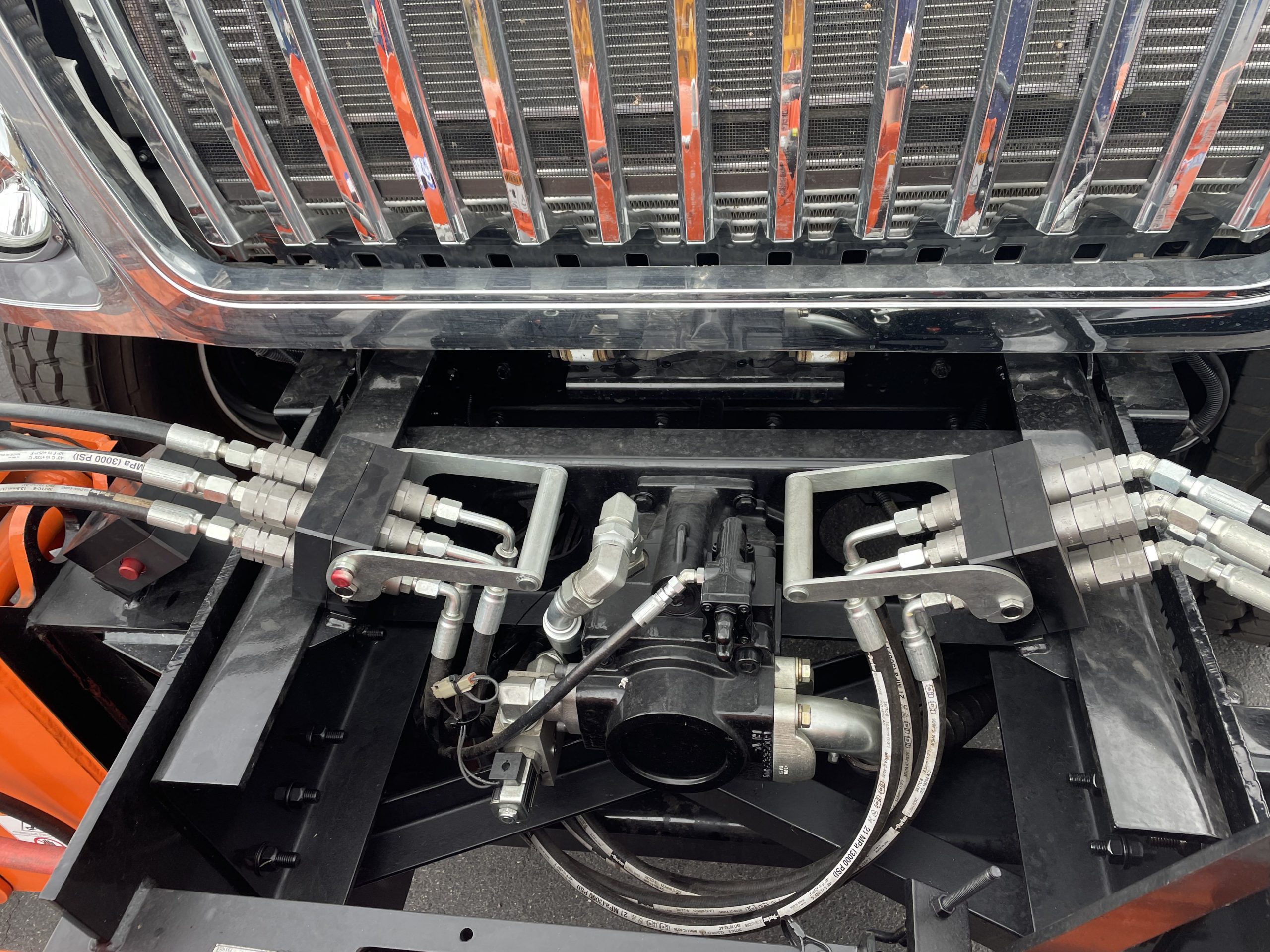
Stucchi multi-coupling options include DP, GR, GRE, SV2, BM3, One Position Plates, and FAP/FAPZ replacement couplers. Standard plate families may solve the need, while custom plate configurations can be reviewed when the machine layout, space envelope, line count, or workflow requires a more application-specific interface.
For equipment that combines hydraulic and electrical lines in a single connection area, Stucchi’s multi-coupling solutions for simultaneous hydraulic and electrical connections offer another way to organize the entire interface around a guided, repeatable process.
How Efficient Interchangeability Improves Hydraulic Connection Performance
Efficient hydraulic interchangeability should improve the connection behavior around the machine, not only the part fit. The strongest opportunities usually appear in these areas:
- Changeover consistency – Operators follow a more repeatable connection process when lines, couplers, and plates are organized around the actual attachment workflow.
- Reduced cross-connection risk – Multi-line systems can be arranged so that the correct circuits engage together, rather than relying on individual line matching each time.
- Fleet standardization – Maintenance teams can reduce one-off replacement decisions by reviewing connection types, body sizes, threads, adapters, and auxiliary interfaces across equipment groups.
- Cleaner connection practices – Flat-face couplers, dust caps and plugs, protected hose storage, clean coupler faces, and organized multi-line interfaces can help reduce contamination exposure during attachment changes. For fleets that need repeatable connection procedures across operators and locations, Stucchi’s zero-spill hydraulic SOP guidance can support cleaner disconnect, storage, and reconnection practices.
- Better pressure and flow review – Coupler sizing, working pressure, peak pressure, and pressure drop should be reviewed before a connection point becomes a heat, performance, or premature wear issue.
When a Replacement Coupler, Adapter, or Thread Conversion May Be Enough
Not every interchangeability request requires a multi-coupling plate or a custom hydraulic solution. In some applications, the correct answer is a direct replacement coupler, a flat-face connection, an adapter, a thread conversion, or a brand-compatible coupler that restores the existing connection point.
A standard replacement may be appropriate when the current connection works correctly, the replacement is driven by normal wear or damage, and the pressure, flow, media, seal, thread, and port requirements are confirmed. In that case, the review protects the user from having to guess while keeping the solution practical.
The distinction is important. Stucchi can help determine whether a direct replacement solves the issue or whether repeated failure, connection difficulty, heat, contamination, or multi-line workflow points to a broader connection review.
When Hydraulic Interchangeability Requires Engineering Review
Engineering review becomes important when the connection point affects more than just replacement availability. OEMs, fleet managers, distributors, and maintenance teams should review the application when the issue involves:
- Recurring replacement, leakage, or premature wear
- Pressure drop, overheating, or residual pressure
- Contamination exposure, crossed lines, or operator access issues
- Mounting space, CAD review, or custom connection layout
- Mixed-fleet standardization or legacy equipment replacement

Stucchi’s OEM and Engineering Solutions Hub supports design-in assistance, sizing guidance, CAD resources, and application review for hydraulic connection systems. The Stucchi Technical Help Desk gives equipment teams a direct path to submit photos, part numbers, drawings, measurements, CAD files or system requirements for identification, troubleshooting, and next-step review.
The review should also include pressure requirements. The relationship among working pressure, peak pressure, and burst pressure should be confirmed before a replacement or a multi-line interface is specified, especially when the equipment experiences pressure spikes, demands duty cycles, or is used with high-flow attachments.
What to Send for a Hydraulic Interchangeability Review
You do not need every technical detail before starting a review. Helpful information gives Stucchi the context to identify the existing connection, understand the operating condition, and determine whether the solution should be a direct replacement, adapter, multi-coupling plate, auxiliary kit, or custom interface.
- Machine make, model, and equipment type
- Attachment details and how often it is connected or disconnected
- Current coupler part numbers, body size, thread type, or port style
- Photos of the coupler face, hose assembly, machine interface, and damaged or leaking component
- Flow rate, working pressure, and peak pressure when available
- Hydraulic fluid or media, operating temperature, and environmental exposure
- Connection problem or desired outcome, such as leakage, pressure lock, heat, contamination, line crossing, or standardization
- Drawings, CAD files, mounting constraints, or space limitations for OEM and custom layouts
For applications involving multiple hydraulic circuits, high-cycle attachment changes, unusual machine layouts, or aggressive operating conditions, Stucchi can review whether a custom hydraulic connection solution is more appropriate than a catalog-only replacement.
Hydraulic Interchangeability FAQs
What features help prevent cross-connection errors in multi-coupling systems?
Multi-coupling systems help prevent cross-connection errors by organizing multiple hydraulic, electrical, pneumatic, water, or fluid lines into a guided interface. Fixed port positions, keyed layouts, alignment features, and mechanical locking help ensure the plate halves come together in the correct orientation before the circuits engage. Depending on the application, Stucchi multi-coupling solutions can also support flat-face connection technology, pressure management features, and custom port configurations that help make the connection process cleaner, more repeatable, and less dependent on individual line matching.
What couplers are ideal for attachment rental fleets with mixed equipment?
Attachment rental fleets usually need couplers that support interchangeability, contamination control, pressure performance, and consistent connection behavior across different machines and attachments. Flat-face hydraulic quick couplers are commonly used in mobile equipment and attachment applications because the connection face is easier to wipe clean and helps reduce fluid loss during connection and disconnection. For mixed fleets, the review should also confirm body size, thread type, flow rate, working pressure, peak pressure, residual-pressure conditions, seal compatibility, and whether the fleet would benefit from adapters, auxiliary kits, connect-under-pressure capability, or multi-coupling plates.
Stucchi can help rental fleet teams evaluate whether a direct replacement coupler is enough or whether a more standardized hydraulic connection strategy would improve attachment changeovers across machines, branches, operators, and service teams
How do I ensure interchangeability when replacing legacy quick couplers in a mixed fleet?

Start by identifying the existing coupling profile, body size, thread type, port style, pressure rating, flow requirement, and seal/media compatibility. Legacy quick couplers may follow different interchange standards or connection styles, so a part that appears to fit physically may not support the same pressure, flow, residual-pressure behavior, or contamination-control needs in the application.
For mixed fleets, the replacement review should also consider whether the goal is a one-time service replacement or a broader standardization effort across machines and attachments. Stucchi can help determine whether the correct path is a direct replacement, an adapter, a flat-face coupler update, a connect-under-pressure solution, a multi-coupling plate, or a custom hydraulic connection package that makes the fleet easier to connect, service, and repeat.
How do I standardize coupler specs across a mixed fleet of attachments?
Start by documenting the current hydraulic connection points across the fleet, including coupler style, body size, thread type, port configuration, flow rate, working pressure, peak pressure, seal material, fluid/media, and connection frequency. Once those details are confirmed, the fleet can be reviewed for common coupler sizes, compatible flat-face connections, adapters, auxiliary hydraulic interfaces, and connection points that may need connect-under-pressure capability.
For attachments with multiple hydraulic lines, electrical lines, or repeated changeovers, standardization may also include multi-coupling plates that organize several circuits into one guided connection process. Stucchi can help equipment teams determine where a direct replacement is enough and where a more consistent hydraulic connection strategy would reduce one-off parts decisions, improve attachment changeovers, and support easier service across machines, operators, and locations.
Build a More Repeatable Hydraulic Connection Strategy
A hydraulic connection strategy should align with the circuit’s physical requirements and the way machines are used in the field. For mixed fleets, high-cycle attachment changes, and legacy interfaces, reviewing line count, coupler style, sizing, contamination exposure, and operator sequence helps Stucchi recommend a practical path instead of a one-size-fits-all answer.
Efficient hydraulic interchangeability makes connection points easier to identify, connect, service, and reuse across the equipment that depends on them. The right solution may be a direct replacement, an adapter, a flat-face upgrade, a multi-coupling plate, an auxiliary hydraulic kit, or a custom connection package. Contact Stucchi to review your hydraulic interchangeability challenge and determine the right connection path for your machines, attachments, and operators.