

Hydraulic Contamination Control & Zero-Spill Resource Center
Contamination Control Starts at the Connection Interface
Hydraulic contamination control begins at the connection interface, where systems are most exposed during attachment changes, disconnection, transport, and storage. This resource center explains how flat-face couplers, connect-under-pressure technology, dust caps and plugs, and standardized operating procedures work together to reduce fluid loss, prevent ingress of contaminants, and support zero-spill performance.
By engineering cleanliness into hydraulic connections rather than managing contamination after failures, OEMs, dealers, and fleet operators can improve equipment reliability, environmental protection, safety, and uptime across mobile, industrial, and high-demand applications.
Why Contamination Control Matters in Hydraulic Systems
Contamination remains one of the most persistent and costly threats to hydraulic system reliability. While filtration, fluid selection, and maintenance practices are critical, contamination most often enters hydraulic systems at their most vulnerable point: the connection interface.
Each time a hydraulic quick coupler is disconnected—during attachment changes, maintenance, transport, or storage—sealing surfaces and internal valve components are briefly exposed to the surrounding environment. Dirt, moisture, and fine debris introduced at this moment are carried directly into the hydraulic circuit during reconnection, frequently bypassing filtration altogether.
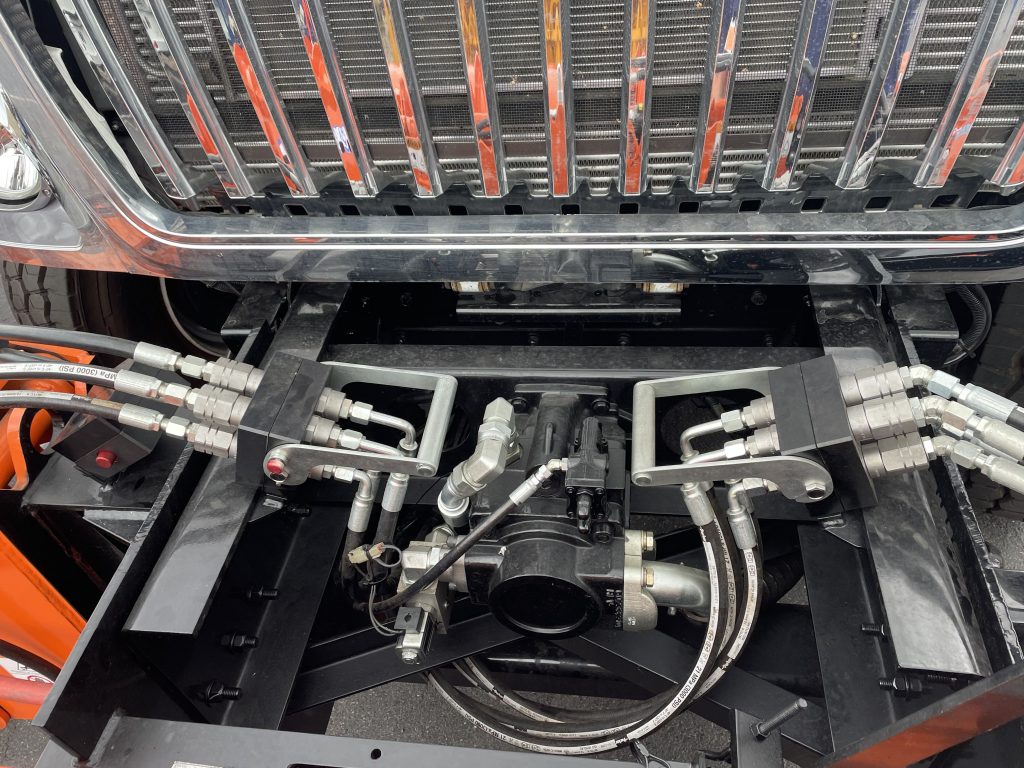
Connection points are especially high-risk because they sit upstream of many protective elements. Once contaminants enter the circuit, they can circulate repeatedly through pumps, valves, and actuators, accelerating wear, degrading performance, and increasing the likelihood of leaks, unplanned downtime, and premature component failure. The result is not only higher maintenance costs, but compounded operational disruptions, safety risks, and environmental exposure.
Effective contamination control, therefore, must start at the point of connection. By addressing how hydraulic interfaces are designed, connected, disconnected, sealed, and protected between operating cycles, OEMs and fleet operators can significantly reduce the risk of contamination ingress and prevent contamination in hydraulic systems before it becomes a system-wide problem.
The Most Common Contamination Entry Points in Hydraulic Systems
Hydraulic contamination does not occur randomly. It enters the system at predictable moments, when the circuit is exposed to the environment, pressure is improperly managed, or connections are handled without standardized controls.
Understanding where contamination is introduced is essential, as most damage occurs before filtration has a chance to protect the system. The following scenarios represent the most common and most overlooked contamination entry points across mobile, industrial, OEM, and fleet hydraulic applications.
Attachment Changes
Attachment changes are among the highest-risk contamination events in hydraulic systems.
Each time an attachment is removed, hydraulic connections are briefly exposed. Sealing surfaces, valve faces, and elastomers are no longer protected by pressurized oil or mechanical closure. During this window, airborne dust, moisture, grit, and jobsite debris can settle directly onto the coupling interface.
The risk increases when:
- Attachments are swapped frequently
- Equipment operates in dusty, muddy, or outdoor environments
- Attachments are shared across machines or fleets
When the attachment is reconnected, contaminants resting on the coupling face are pushed directly into the hydraulic circuit, often upstream of filtration. Over time, repeated attachment changes compound contamination levels and accelerate wear in pumps, valves, and actuators.
Hose Disconnection and Reconnection
Hydraulic hoses disconnected for maintenance, repair, or configuration changes create open-system exposure points.
Uncapped or improperly protected hose ends allow contaminants to:
- Enter the hose during storage
- Accumulate on sealing surfaces
- Be driven into the circuit during reconnection
Even brief exposure can introduce fine particles that bypass filters and recirculate throughout the system. This is especially problematic in high-precision hydraulic applications, where small particles can have outsized impacts on performance and component life.
Improvised protection methods, such as rags, tape, or plastic bags, often worsen the problem by shedding fibers or failing to fully seal the interface.
Transport and Storage Conditions
Transport and idle storage periods are frequently underestimated sources of contamination.
Attachments, hoses, and machines often sit disconnected for hours, days, or weeks between uses. During this time:
- Temperature changes cause internal pressure fluctuations
- Condensation can form inside couplers and hoses
- Dust and debris accumulate on exposed interfaces
If connection points are not sealed during storage and transport, contaminants enter the system before the next operation begins, making the reconnect event occur when contamination is introduced into the circuit.
This is especially common in rental fleets, seasonal equipment, municipal operations, and multi-site job workflows.
Residual Pressure Events
Residual (trapped) hydraulic pressure is a major contributor to contamination and fluid loss.
Pressure can remain trapped due to:
- Thermal expansion of fluid
- Gravity-loaded attachments
- Incomplete pressure relief during shutdown
When pressure is present during disconnect or reconnect, operators may:
- Crack fittings to relieve pressure
- Force couplers together
- Experience unintended fluid discharge
These actions increase the risk of spills, air ingestion, and contamination while creating safety hazards. Improper pressure relief often introduces contaminants at the moment operators are most focused on simply “making the connection work.”
Improper or Unsafe Pressure Relief Practices
In the absence of standardized procedures or appropriate connection technology, operators often resort to unsafe workarounds to manage pressure and stuck couplers.
Common examples include:
- Loosening fittings or adapters
- Tapping couplers to force valve movement
- Leaving connections partially engaged
These practices introduce uncontrolled fluid release, airborne oil mist, and environmental contamination. They also create direct pathways for dirt and debris to enter the system at precisely the wrong moment—when valves are opening and flow paths are exposed.
From a contamination control standpoint, unsafe pressure relief is not just a safety issue, it is a predictable contamination event.
Why These Entry Points Matter
Across all these scenarios, the pattern is consistent:
- Contamination enters before filtration
- Exposure happens during disconnect, idle, or reconnection
- Risk increases with frequency, pressure, and environmental severity
- Costs compound through downtime, cleanup, component wear, and system instability
This is why contamination control must be addressed as a connection-system problem, not just a fluid- or filter-related issue.
Why Zero-Spill Connection Behavior Is Critical to Contamination Control
Controlling contamination in hydraulic systems is not achieved by a single component or accessory. It results from how hydraulic connections are handled at every quick-connect and disconnect.
Zero-spill performance matters because fluid loss, pressure instability, and ingress of contaminants all occur simultaneously when the hydraulic circuit is opened or closed. Zero-spill behavior defines whether contamination is prevented or introduced during routine operations.
Fluid Loss and Contamination Are Linked Events
Oil leakage during connection or disconnection is more than a housekeeping issue. When hydraulic fluid escapes the system, it signals that the circuit is uncontrolled at the interface. At that same moment:
- Valve faces are opening
- Sealing surfaces are exposed
- Pressure is transitioning unpredictably
- Ambient contaminants are present
Any uncontrolled release of fluid increases the likelihood that air, moisture, or debris will follow that same path into the system. From a contamination-control perspective, spills and ingress are two sides of the same failure mode.
This is why “zero-spill” is not just about environmental compliance; it is an indicator of whether the hydraulic connection process is clean and controlled.
Uncontrolled Connections Create Repeatable Contamination Risk
Many contamination events are not the result of negligence; they stem from systems that require workarounds.
When operators encounter:
- Hard-to-connect couplers
- Unexpected residual pressure
- Misaligned interfaces
- Inconsistent attachment compatibility
…they often adapt their behavior simply to keep equipment moving. Unfortunately, these adaptations, such as cracking fittings, forcing connections, and partially engaging couplers, introduce uncontrolled exposure points.
Over time, even well-trained operators will prioritize uptime unless systems and standard operating procedures are designed to support clean, repeatable, spill-free connections under real-world conditions.
Zero-Spill Is a Repeatable Process, Not a One-Time Outcome
Achieving zero-spill performance once is not the goal. The goal is consistent, repeatable behavior across operators, machines, attachments, and job sites.
This requires:
- Predictable pressure behavior at disconnects
- Controlled fluid movement during connection
- Clean, protected sealing surfaces
- Couplings and interfaces that do not vary across brands or attachments
When connection behavior is predictable, operators follow procedures naturally. When it is not, procedures break down, even when written correctly.
This distinction is critical: contamination control fails most often at the moment when procedures must compensate for hardware limitations.
Why Connection Behavior Must Be Engineered, Not Assumed
Many standard operating procedures assume that:
- Pressure will be relieved correctly
- Interfaces will align consistently
- Connect/disconnect forces will be manageable
- Connections will behave the same across machines
In mixed fleets, rental environments, or high-utilization operations, those assumptions rarely hold. Zero-spill behavior must be engineered into the system, so operators are not required to fight the connection to do the right thing. When equipment, interfaces, and pressure management are aligned, clean connection behavior becomes a default, not an exception.
How Standard Operating Procedures Reduce Contamination Risk at Hydraulic Connections
Standard Operating Procedures (SOPs) are among the most effective yet often misunderstood tools for hydraulic contamination control. When designed correctly, SOPs do not depend on ideal conditions or perfect equipment behavior. Instead, they define repeatable actions that reduce exposure at the most vulnerable moments in the hydraulic system lifecycle.
In the context of hydraulic connections, SOPs are not primarily about speed or efficiency. Their real function is to control what happens during disconnection, idle periods, and reconnection, when contamination risk is highest, and filtration offers no protection.

Why SOPs Alone Often Fall Short
Many contamination-control programs emphasize filtration, fluid selection, and maintenance intervals while overlooking the connection process itself. This creates a gap between procedural intent and real-world outcomes.
SOP breakdowns most often occur when:
- Residual pressure behaves inconsistently
- Connection effort varies by machine or attachment
- Mixed fleets force operators to adapt procedures in the field
- Environmental conditions make “ideal” execution unrealistic
In these cases, contamination occurs not because SOPs are missing, but because procedures lack predictable connection behavior.
Critical Steps in Hydraulic Quick-Connect SOPs
Well-written connection SOPs focus on managing exposure across four recurring events:
- Before disconnection – controlling pressure to avoid fluid release and air ingestion
- During disconnection – ensuring clean separation without spray or seepage
- During idle, transport, or storage – protecting exposed interfaces from debris and moisture
- Before reconnection – verifying cleanliness so contaminants are not introduced upstream of filtration
Each of these moments represents an opportunity to either block contamination or introduce it permanently into the system.
SOPs Must Reflect Real Operating Conditions
Effective contamination-control SOPs assume variability. They are written with the understanding that:
- Residual pressure may be present
- Attachments may behave differently across brands
- Operators may rotate between machines and shifts
- Dirt, moisture, temperature swings, and confined access are unavoidable
This is why SOPs cannot function as abstract checklists. They must account for both human behavior and hardware limitations.
Where SOPs Require System-Level Support
SOPs alone cannot guarantee zero-spill or contamination-controlled performance. They are most effective when paired with connection systems designed to support clean execution, including:
- Coupling interfaces that disconnect cleanly
- Pressure-management and connect-under-pressure (CUP) solutions that eliminate forced connections
- Accessories such as dust caps that protect exposed components
- Standardized interfaces across machines, attachments, and brands
When procedures and system design are aligned, SOPs become enforceable without friction. Operators no longer need to compensate for inconsistent hardware; the system supports clean behavior by default.
Operator and Fleet SOPs: How Responsibilities Differ—and Work Together
Standard operating procedures play different roles depending on who is responsible for execution. Operators and fleet or OEM stakeholders influence contamination risk in distinct but complementary ways.
Operator-Level SOPs: Controlling Exposure at the Point of Connection
Operators have the greatest impact during connection and disconnection events, when sealing surfaces are exposed, and filtration offers no protection. Effective operator SOPs prioritize consistency over complexity, focusing on repeatable actions that control pressure behavior, limit exposure time, and ensure interface cleanliness before reconnection.
These procedures are most valuable in environments with frequent attachment changes, mixed tools, multiple shifts, or harsh operating conditions. When followed consistently, operator SOPs reduce the likelihood of common contamination scenarios, such as disconnecting under residual pressure, reconnecting dirty interfaces, or forcing resistant couplers, before those issues enter the hydraulic circuit.
Fleet and OEM SOPs: Making Clean Behavior Sustainable at Scale
While operator SOPs manage individual events, fleet- and OEM-level SOPs determine whether clean connection practices are sustainable across machines, attachments, operators, and brands over time. This includes decisions around interface standardization, attachment interchangeability, pressure management strategy, and accessory requirements during transport and storage.
At this level, contamination control becomes an engineering and operational discipline, not just a behavioral one. Fleet and OEM SOPs establish the conditions that enable operators to follow clean procedures without workarounds by specifying compatible interfaces, predictable pressure behavior, and connection systems that support zero-spill execution throughout the equipment lifecycle.
Where SOPs End—and System Design Begins
Even the best SOPs have limits when residual pressure, inconsistent interfaces, or cross-brand attachments are involved. That transition point, where procedures must be supported by hardware, is where system-level connection design becomes essential.
A practical, execution-focused breakdown of both operator and fleet SOPs, including step-by-step guidance and real-world conditions, is covered in more detail in Stucchi’s guide, Standard Operating Procedures for Zero-Spill Hydraulic Processes, which expands on daily execution, pressure management, and connection discipline for operators and fleet managers.
How System Design Enables SOP Compliance and Prevents Workarounds
Standard operating procedures are only as effective as the hardware supporting them. When connection systems work against the SOP, by trapping pressure, leaking during disconnect, or exposing sealing surfaces, operators are forced into improvisation. That’s where contamination, spills, and safety risks re-enter the process.
Effective contamination control depends on design choices that make the correct procedure the easiest one to follow.
From a system perspective, zero-spill performance is achieved when connection technology actively supports:
- Safe pressure management
- Minimal exposure at disconnects
- Clean, repeatable reconnection
- Protection during idle, transport, and storage
This is where connection design, accessories, and bundling become critical, not as optional add-ons, but as SOP enablers.
Leak-Free Hydraulic Products Coupled with Expert System Design Provides Greatest Zero-Spill Advantages
Flat-Face Interfaces Reduce Exposure at the Point of Disconnect
One of the most significant contributors to contamination ingress is exposure created during hose separation. Traditional poppet-style couplers tend to leave cavities that retain fluid and trap debris. When disconnected, these cavities allow oil loss and provide a direct path for contaminants.
Flat-face couplings address this problem at the interface level by:
- Eliminating exposed cavities
- Minimizing retained fluid at separation
- Providing smooth surfaces that can be wiped clean immediately
- Reducing the opportunity for dirt to be pushed into the system during reconnection
Flat face hydraulic couplers disconnect leak-free by using a flush-valving mechanism that seals both halves simultaneously upon disconnection, preventing fluid from escaping. As the sleeve retracts and the coupling separates, internal springs force the flat valve surfaces together, closing the flow path before any significant fluid loss occurs, often resulting in no spillage or air inclusion.
This is why flat-face couplers are frequently specified in contamination-sensitive environments and why standards such as ISO 16028 are often referenced when leak control and cleanliness are required. Stucchi’s flat face coupling design set the ISO 16028 International Standard, with technology such as
From an SOP standpoint, flat-face designs reduce the burden on the operator. The interface itself limits exposure, rather than relying on perfect timing or ideal conditions. Learn more about how flat face couplings reduce impurities and contamination of hydraulic systems.
Connect-Under-Pressure (CUP) Technology Prevents Unsafe Pressure-Relief Workarounds
Residual pressure is one of the most common reasons SOPs break down in the field. When pressure remains trapped in a circuit, operators encounter resistance during reconnection and often resort to unsafe or improvised methods to relieve it.
These actions, such as cracking fittings, loosening couplers, or forcing connections, introduce:
- Fluid discharge
- Air ingestion
- Immediate contamination risk
- Safety hazards to personnel

Connect-Under-Pressure technology eliminates this failure mode by enabling controlled connection even when pressure is present on one or both sides of the circuit. By managing pressure internally during connection, CUP couplers allow operators to quick-connect without violating SOPs or introducing contamination.
From a contamination-control perspective, CUP solutions do more than improve convenience; they eliminate one of the most common causes of leaks, spills, and procedural shortcuts. CUP technology belongs in any serious zero-spill strategy and acts as a natural extension of contamination-control SOPs rather than a separate topic.
Multi-Coupling Plates: Quick Connect and Disconnect Multiple Lines with Leak-Free Couplers
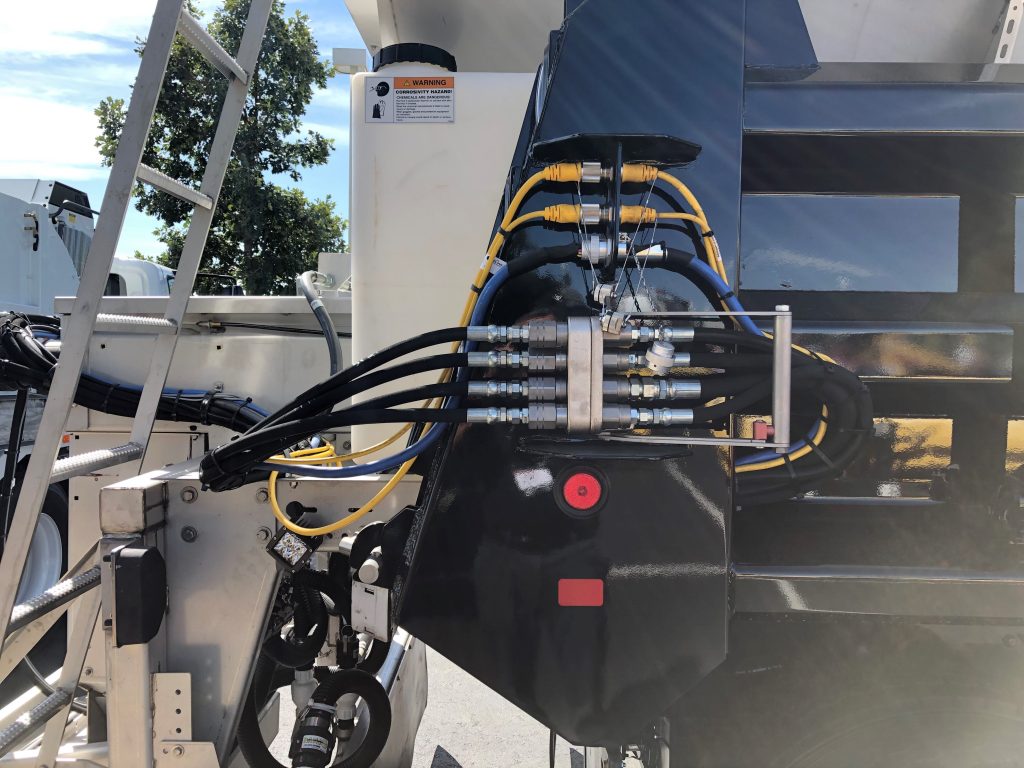
Multi-coupling plate systems play an important role in maintaining a leak-free hydraulic system when paired with flat-face, zero-spill couplers and CUP technology. Multi-coupling plates reduce exposure time at the connection interface and eliminate variability associated with individual hose connections by enabling the quick connect and disconnect of multiple hydraulic and electrical lines simultaneously. These systems significantly limit fluid loss, prevent cross-connection errors, and support clean disconnection even in high-pressure or high-cycle applications.
From an SOP perspective, multi-coupling plates reduce the number of actions an operator must perform correctly during attachment changes. Instead of managing multiple individual connections, each with its own potential for residual pressure, leakage, or contamination, multi-coupling plates mechanically enforce proper alignment and engagement. This makes zero-spill behavior more consistent across operators, shifts, and environments.
Dust Caps and Plugs Close the Loop Between Disconnect and Reconnect
Even the cleanest disconnect creates a moment of vulnerability. Once a coupling is separated, its sealing surfaces are exposed to the environment, often during transport, staging, or storage.
Dust caps and plugs serve as the final contamination barrier in the SOP chain by:
- Sealing residual fluid inside the coupling
- Preventing airborne and contact contamination
- Protecting sealing surfaces from damage
- Maintaining cleanliness until the next connection event
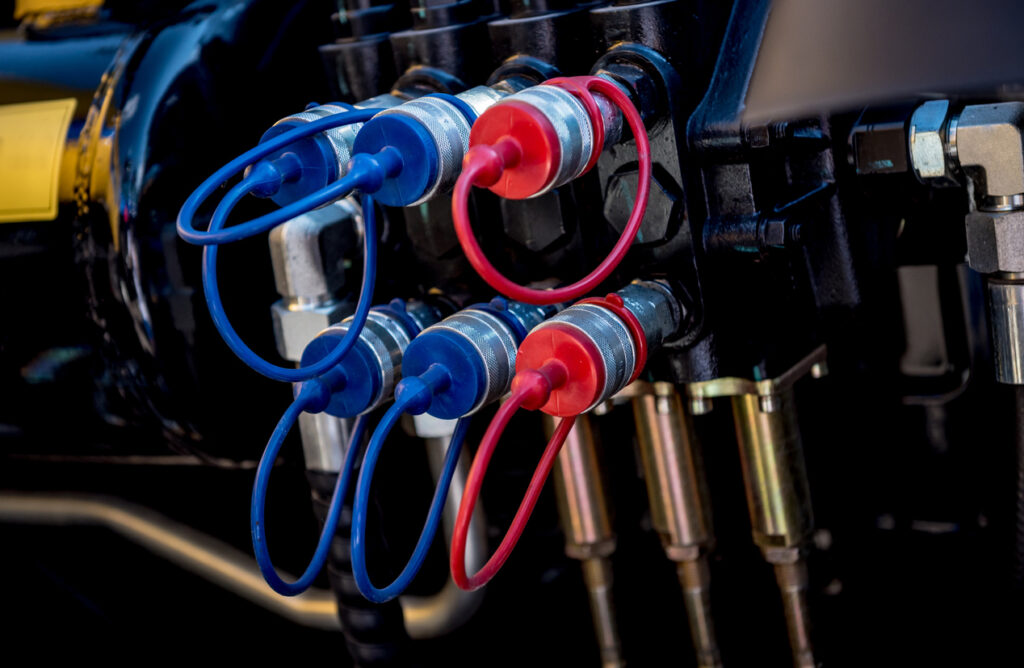
When caps and plugs are treated as integral components rather than optional accessories, they reinforce SOP compliance by making it easy to protect couplers immediately after disconnect.
In high-uptime fleets, capping practices often determine whether cleanliness is preserved between shifts, machines, or job sites. For more information, see Stucchi’s guide: How Do Hydraulic Quick Coupler Caps Support Contamination Control and Zero-Spill Operation?
Integrated Systems Minimize Variability Among Operators and Equipment
One of the most effective ways to support SOP compliance at scale is to standardize the hydraulic connection system itself. When couplers, pressure management, and protective accessories are specified as an integrated system, variability at the interface is reduced.
Bundled contamination-control solutions typically align:
- Flat-face couplers
- Connect-under-pressure (CUP) coupling capability where required
- Multi-coupling plates for interface consistency across machines and attachments
- Proper dust caps and plugs
This approach removes ambiguity at the point of execution. Operators and maintenance teams no longer need to adapt procedures to inconsistent interfaces; the connection system behaves predictably across machines, attachments, and operators. From a fleet and OEM standpoint, this is where SOPs stop being aspirational and become enforceable.
From Leak-Free Procedures to Repeatable Outcomes
Effective contamination control depends on alignment between procedural discipline and system design. When connection interfaces disconnect cleanly, manage pressure safely, and remain protected during idle and storage periods, SOPs become easier to execute and far more likely to be followed consistently.
This system-level alignment defines how Stucchi approaches contamination control. Rather than relying on best-case conditions or individual workarounds, Stucchi engineers hydraulic connection solutions that make zero-spill behavior repeatable across operators, machines, and environments.
That strategy extends beyond couplers alone. The following leak-free hydraulic elements all play a role in controlling pressure behavior, preventing backflow, and isolating contamination pathways within the system.
- Flat-face couplers
- Threaded flat-face couplers
- Multi-coupling plates
- Hydraulic check valves and adapters
- Dust caps and accessories
Stucchi’s approach to preventing contamination in hydraulic systems explains how these components work together to support cleaner operation by design, including through the use of check valves to stabilize circuits and limit contamination migration upstream.
Cleanliness During Transport, Storage, and Idle Conditions
Contamination control does not end when hydraulic lines are disconnected. In many fleets and job sites, the highest-risk contamination events occur after disconnect, during transport, staging, or storage, often when equipment is idle and outside controlled environments.
Disconnected couplers left exposed on trailers, attachment racks, or shop floors become collection points for:
- Windblown dust and debris
- Moisture, snow, and condensation
- Mud, grease, and handling contamination
- Residual oil that attracts particulates
Once these contaminants reach the sealing surface, they are carried directly into the hydraulic circuit at the next reconnection, often upstream of filtration. This is why transport and storage practices are now viewed as core elements of contamination control, not secondary housekeeping steps.
Why Idle Equipment Poses a Hidden Contamination Risk
Idle periods create a false sense of safety. Equipment is stationary, pressure is relieved, and no active work is occurring… yet the contamination risk continues to accumulate.
Common idle-condition risks include:
- Hoses resting on the ground or against dirty steel surfaces
- Attachment-mounted couplers exposed for days or weeks
- Caps missing, damaged, or incompatible with the coupler geometry
- Condensation forming inside partially sealed interfaces
Because these conditions develop gradually, they often go unnoticed until contamination shows up later as:
- Premature seal wear
- Valve sticking or drift
- Accelerated filter loading
- Unexplained system degradation
At that point, the contamination event is long past and difficult to trace.
Transport Practices That Reinforce Clean Break Integrity
Transport events introduce motion, vibration, and environmental exposure, exactly the conditions that challenge contamination control.
Best-practice transport strategies include:
- Securing hoses and capped couplers off the trailer deck
- Using attachment-mounted holsters or holders designed to keep ends elevated
- Keeping paired caps or dummy couplings engaged to fully seal interfaces
- Avoiding cap-on-ground contact during loading and unloading
These practices reduce contamination risk without adding procedural burden, especially when the hardware supports easy stowage and retention. The key principle is consistency: when storage solutions are built into the system, cleanliness becomes automatic rather than a procedural step.
Storage Cleanliness Supports Long-Term SOP Compliance
From a system-level view, storage and transport controls serve a larger purpose: they preserve SOP integrity over time.
When couplers remain clean between uses:
- Operators are less likely to wipe debris into the interface
- The connection force is reduced
- Seal damage is minimized
- Pressure behavior remains predictable
This reduces friction at the point of reconnect and increases long-term compliance with pressure relief and zero-spill procedures. In other words, clean storage conditions make correct SOP execution easier, and incorrect shortcuts less tempting.
Where Transport & Storage Fit in a Contamination Control System
Transport and storage practices close the gap between disconnect and reconnect. Alongside:
- Flat-face interfaces that reduce exposure
- Connect-under-pressure solutions that prevent unsafe pressure relief
- SOPs that define clean behavior
…storage controls ensure cleanliness is maintained during the interim period.
This completes the contamination control loop:
disconnect → protect → transport → store → reconnect
Each step reinforces the next.
Why Small Leaks Create Disproportionate Cost, Risk, and Downtime
Hydraulic contamination control is often undermined by how leakage is perceived. A few drops during connection, a light sheen on a coupler face, or a minor weep after disconnect are frequently dismissed as normal operating conditions. In reality, these “small” events compound into measurable operational, environmental, and financial risk.
Leakage at connection points has a disproportionate impact because it occurs frequently and outside controlled filtration zones. Over time, these factors increase costs in ways that are not always immediately visible in maintenance logs.
Leakage Is Not Just Fluid Loss — It’s a System Integrity Signal
When hydraulic fluid escapes during connection or disconnection, it typically indicates one or more underlying issues:
- Residual pressure that was not safely managed
- Sealing surfaces compromised by contamination
- Mismatched or worn connection interfaces
- Improvised pressure-relief practices
Each of these conditions increases the likelihood that air and debris are also entering the system. In this sense, leakage and contamination are inseparable problems; fluid leaving the system almost always correlates with something undesirable entering it.
That’s why zero-spill performance is increasingly used as a proxy for overall system health.
Cleanup Costs and Environmental Exposure Escalate Quickly
From an environmental and compliance perspective, even minor hydraulic spills can trigger:
- Absorbent material use and disposal
- Cleanup labor and equipment downtime
- Reporting requirements in sensitive or regulated areas
- Increased scrutiny on future job sites
In sectors such as construction, mining, infrastructure, utilities, and environmental remediation, even small hydraulic oil releases can create reputational and contractual risk. Many projects now operate under spill-prevention plans that treat any uncontrolled fluid release as a deviation.
As a result, organizations are shifting from reactive spill management to preventive, zero-release system design.
Downtime Is Often the Largest Hidden Cost
The most significant cost associated with contamination and leakage is frequently lost time, not lost fluid.
Common downtime drivers include:
- Couplers that won’t reconnect due to trapped pressure
- Attachments delayed by forced pressure relief attempts
- Secondary cleanup before equipment can re-enter service
- Premature component wear leading to unplanned maintenance
These interruptions are rarely logged as contamination failures, yet they directly impact productivity and uptime. From a fleet or OEM standpoint, this reframes contamination control as a productivity strategy as well as a cleanliness initiative.
Why Environmental, Safety, and ESG Goals are Converging at the Connection Point
As ESG (Environmental, Social, and Governance) expectations and environmental accountability increase, hydraulic connection performance has moved into sharper focus.
Zero-spill connections support:
- Reduced environmental exposure and remediation costs
- Safer working conditions with fewer slips and injection hazards
- Lower fluid consumption and disposal volumes
- Demonstrable commitment to environmental stewardship
This alignment explains why many organizations now require:
- Documented zero-spill procedures
- Standardized connection technologies
- Consistent cleanliness controls across fleets and attachments
In these environments, leak-free performance is more than a feature; it’s a baseline expectation.
Why Prevention Must Be Engineered, Not Enforced
The common thread across leakage, contamination, and downtime is that procedures alone cannot overcome hardware limitations.
When operators must:
- Fight pressure to connect
- Work around mismatched couplers
- Manage exposed interfaces during transport
- Compensate for inconsistent sealing
…the system itself is working against zero-spill objectives.
This is where contamination control shifts from a behavioral challenge to a system design requirement, and where operating procedures must be supported by compatible connection technology. This is where hydraulic specialists like those at Stucchi USA shine, helping equipment operators and fleet managers design a fluid power system with maximum uptime and zero-spill, CUP technology.
How System Design Enables Zero-Spill SOP Compliance
Standard operating procedures define what operators should do, but hydraulic system design determines whether those procedures can be followed consistently in the field.
In real operating environments, leaks and contamination events often occur not because procedures were ignored, but because the connection system makes clean execution difficult or unsafe. Residual pressure, incompatible interfaces, exposed sealing faces, and multi-line complexity all undermine SOP compliance, even for trained operators.
System design bridges this gap by removing variability at the connection interface. When couplers, accessories, and pressure-management features are specified together, SOPs shift from best-practice guidance to repeatable outcomes.
Key design principles that support zero-spill SOPs include:
- Connection interfaces that minimize exposed sealing surfaces
- Technologies that safely manage residual and trapped pressure
- Accessories that protect cleanliness during idle, transport, and storage
- Standardization across mixed OEM fleets and attachments
This systems-first approach ensures that contamination control is not dependent on perfect conditions or workarounds but engineered into the connection process itself.
Contamination Control is a Coordinated System
Hydraulic contamination control is most effective when multiple technologies are specified together to address different risk points in the connection lifecycle.
Rather than treating each component in isolation, Stucchi approaches contamination control as a coordinated system. This approach is particularly valuable for:
- Mixed OEM fleets
- Rented equipment
- Multi-function machines
- High-utilization environments
When system design supports interchangeability, zero-spill performance becomes consistent across operators and operating conditions.
Frequently Asked Questions (FAQs) re: Hydraulic Contamination Control
How do flat-face couplers reduce hydraulic fluid loss and contamination compared to poppet-style couplers?
Flat-face (also called flush-face) hydraulic couplers reduce fluid loss and contamination by eliminating the recessed cavities and trapped volumes inherent in traditional poppet-style designs. Instead of relying on spring-loaded poppet valves with “pockets” that retain oil and debris, flat-face couplers mate across smooth, planar sealing surfaces that close cleanly and predictably during connection and disconnection.
From a fluid-loss standpoint, flat-face couplers are engineered for near-zero or zero-spill performance. During disconnection, the internal valves close before the sealing surfaces separate, preventing residual fluid from dripping or spraying. In contrast, poppet-style couplers often release a small but consistent volume of oil due to trapped dead space around the poppet head, contributing to cumulative leakage over time.
The absence of recessed cavities significantly reduces the opportunity for dirt, moisture, and debris to accumulate on exposed coupling faces. Flat-face surfaces can be easily wiped clean prior to reconnection, whereas poppet couplers may trap contaminants deep within the socket, where they are pushed directly into the hydraulic circuit at the next connection. Because contamination introduced at the coupler interface bypasses filtration entirely, this design difference has a meaningful impact on hydraulic system cleanliness, component wear, and long-term reliability.
As a result, flat-face couplers are widely adopted in applications where zero-spill performance, environmental protection, and contamination control are critical, including construction, mining, agriculture, industrial machinery, and sensitive environments. They are most effective when paired with proper operating procedures, protective accessories such as dust caps, and pressure-management solutions that support clean, repeatable connection behavior.
What flat-face couplers meet stringent clean-break environmental standards?
Flat-face hydraulic couplers that meet stringent clean-break environmental standards are most commonly defined by compliance with ISO 16028, the international standard for flush-face, non-spill hydraulic quick couplings. ISO 16028 couplers are engineered to minimize fluid loss, prevent air inclusion, and reduce contamination during both connection and disconnection; key requirements for environmentally sensitive and regulated applications.
Couplers built to ISO 16028 requirements use flush mating valve faces that eliminate internal cavities where oil can be trapped. During disconnection, the internal shutoff valves close before the sealing surfaces separate, containing residual fluid within the coupling rather than allowing it to drip, spray, or escape into the environment. This “dry-break” behavior is a critical factor in meeting clean-break expectations for job sites, waterways, food-grade areas, underground operations, and other sensitive environments.
Beyond the standard itself, clean-break performance depends on manufacturing quality, valve geometry, sealing integrity, and long-term durability under pressure and in the presence of contaminants. ISO-compliant flat-face couplers used in demanding applications are typically paired with protective accessories (such as dust caps), proper pressure management, and standardized operating procedures to maintain consistent zero-spill performance over time.
Stucchi’s flat-face coupler design set the ISO 16028 international standard, and ISO 16028 couplers are widely specified across construction, mining, agriculture, industrial machinery, and municipal equipment, where environmental protection and contamination control are primary design drivers. When properly selected and integrated into the hydraulic system, these couplers help ensure compliance with environmental regulations, reduce cleanup risk, and support cleaner, safer hydraulic operation.
How can quick couplers improve uptime in agricultural implements with frequent swaps?
Quick couplers improve uptime in agricultural operations by enabling faster, more reliable hydraulic connections and reducing fluid loss or contamination during frequent implement changes. In farming applications where tools such as loaders, mowers, balers, planters, or tillage implements are swapped throughout the day, downtime is often driven not just by mounting attachments but by slow, difficult, or inconsistent hydraulic hose connections.
Flat-face hydraulic quick couplers address this by providing clean, flush connection surfaces that are easy to wipe, resist dirt buildup, and disconnect with minimal fluid loss. This reduces time spent addressing leaking hoses, contaminated coupler faces, or hard-to-connect fittings—issues that commonly delay fieldwork and disrupt schedules. By minimizing oil drips and air ingress during repeated connect-and-disconnect cycles, leak-free quick couplers also help maintain consistent hydraulic performance, reducing troubleshooting and mid-season maintenance.
Over the course of a season, these advantages add up to meaningful gains in uptime. Faster, cleaner connections keep equipment moving, protect hydraulic components from contamination-related wear, and reduce unplanned service interruptions during critical planting and harvesting windows. For agricultural operations where timing directly affects yield and profitability, reliable hydraulic quick couplers are essential to keeping machines productive in real-world field conditions.
For a more detailed look at how flat-face, zero-spill couplers support agricultural productivity, cleanliness, and system reliability, see: Boost Agricultural Productivity with Flat-Face Hydraulic Couplers
Engineered Solutions for Clean, Zero-Spill Hydraulic Connections
Contamination control delivers the greatest value when it is engineered into the hydraulic connection system, rather than managed reactively after leaks, failures, or cleanup events occur.
That requires more than individual components; it requires a coordinated approach to interface design, pressure management, and real-world operating behavior.
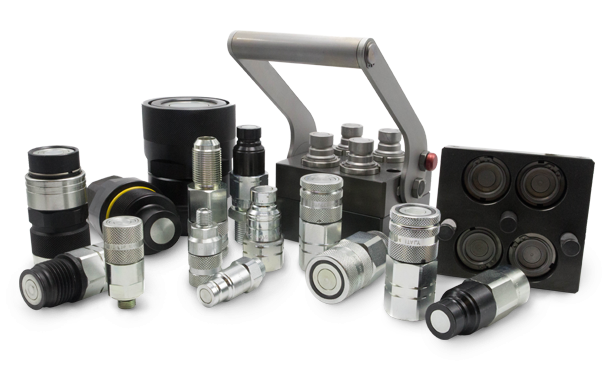
Stucchi USA supports OEMs, dealers, and fleet operators with end-to-end hydraulic system design and engineering expertise. This includes evaluating application demands, troubleshooting connection challenges, and delivering custom-engineered solutions that improve interchangeability, reduce leak risk, and support zero-spill SOPs across machines, attachments, and environments.
Stucchi’s hydraulic solutions bring together flat-face couplers, connect-under-pressure (CUP) technology, adapters, multi-coupling plate systems, and protective accessories into standardized, repeatable connection architectures designed to perform consistently over the life of the equipment.
From a system-design perspective, contamination control is reinforced by:
- Application-driven coupling selection, using structured methodologies such as the STAMP Method™ to match pressure, flow, media, and duty cycle requirements
- Validated pressure performance, including proper evaluation of working pressure, burst pressure, and transient pressure behavior
- Pressure-drop analysis, ensuring high-flow performance without creating heat, inefficiency, or connection instability
- High-flow and multi-line solutions, where flat-face couplers and multi-coupling plates enable fast, clean, simultaneous connections that simplify SOP compliance
- Custom solutions and engineered assemblies that address brand interoperability, attachment interchangeability, and non-standard layouts or operating conditions
When contamination control is addressed at the system level, zero-spill performance becomes repeatable rather than conditional. Operators are no longer asked to compensate for inconsistent interfaces, residual pressure, or mismatched components; the connection system itself supports clean behavior by design.
Contact the Stucchi Technical Help Desk to collaborate directly with a hydraulic specialist and build a connection system that supports contamination control, operational safety, and zero-spill performance from specification through field operation.
Stucchi engineers hydraulic connection solutions that support operational safety and zero-spill performance across demanding mobile and industrial applications. Our hydraulic specialists work with OEMs, dealers, and fleet operators to design reliable, interchangeable connection systems that perform consistently in real-world conditions. Contact Stucchi to evaluate your application and develop a zero-spill hydraulic connection system to support contamination control.