


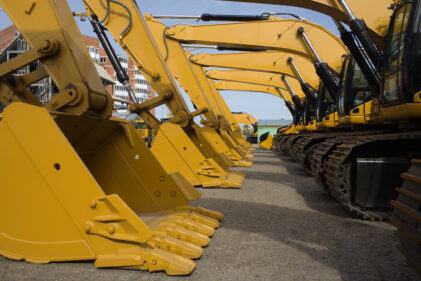

Older hydraulic equipment can often be upgraded with modern flat-face quick disconnects, but the retrofit should start with the full hydraulic connection point, not just the coupler itself. The right solution depends on the machine, attachment, thread style, flow demand, working pressure, residual pressure, and how the equipment is used in the field.
Modern flat-face quick disconnects are a common upgrade because they support cleaner connection practices, reduce fluid loss during disconnect, and help limit contamination at the hydraulic interface. For older machines, that can mean easier attachment changes, cleaner maintenance, better compatibility across mixed equipment, and fewer connection-related problems.
Start by Identifying the Existing Hydraulic Connection
Before replacing older quick disconnects, identify what is currently installed on the machine and attachment. Older equipment may use poppet-style couplers, Pioneer-style couplers, outdated OEM couplings, or non-standard connection sizes. Some machines may also have adapters or modified hose ends from previous repairs.
Start with the basic connection details:
- Current coupler style
- Male and female coupler sizes
- Port thread type
- Hose size
- Machine make and model
- Attachment type
- Standard-flow or high-flow hydraulic system
- Operating pressure and peak pressure
- Whether the machine, attachment, or both sides hold residual pressure
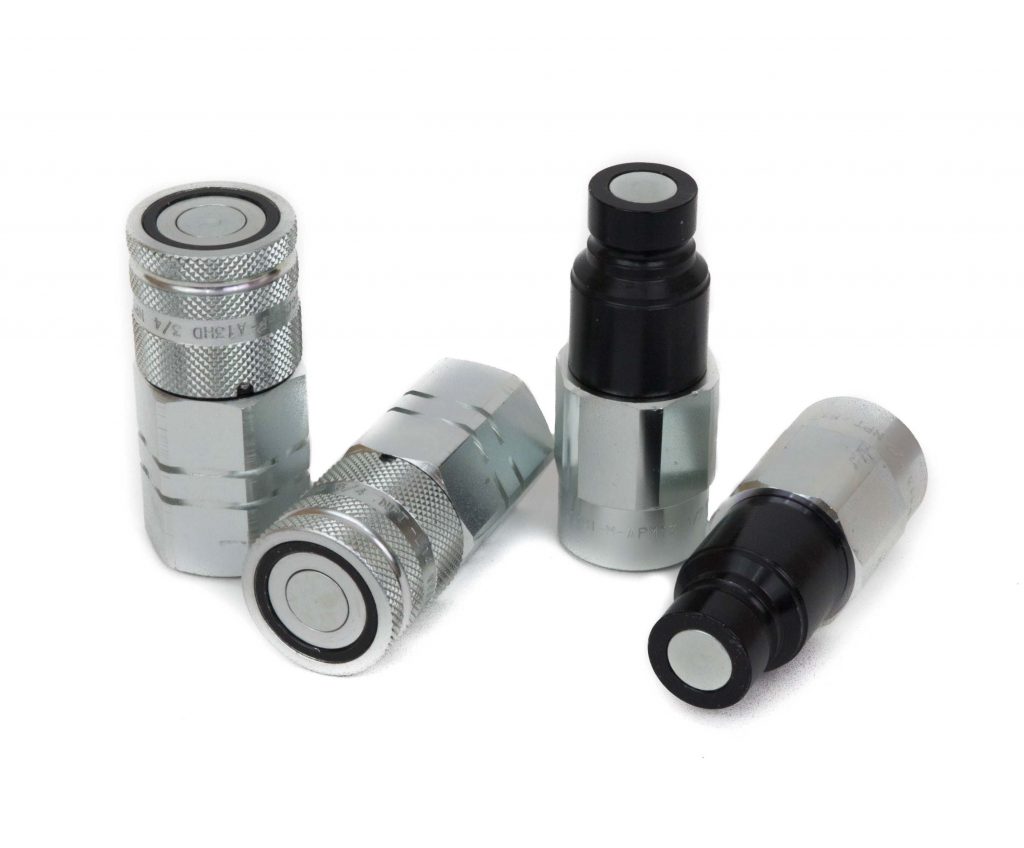
This step matters because two couplers can look similar and still perform very differently. A modern flat-face coupler needs to match the application’s pressure, flow, connection frequency, and jobsite conditions.
Review Flow Before Choosing New Couplers
Flow is one of the most important retrofit details, especially when older machines are being used with newer or more demanding attachments. A coupler that is too restrictive can contribute to pressure drop, heat buildup, slower tool response, and reduced attachment performance.
This is especially important for high-flow tools such as mulchers, brush cutters, breakers, hammers, augers, snow tools, and other hydraulic-powered attachments. If the machine was originally set up for lighter-duty work, the existing couplers may not support the demands of the current attachment lineup.
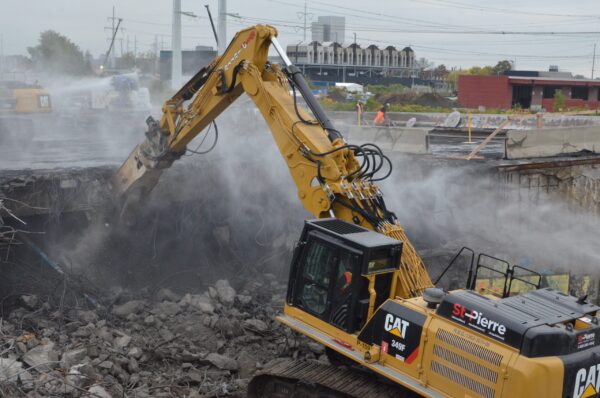
A retrofit should match the coupler to the actual flow required by the attachment. Hose size and thread size are important, but they do not tell the whole story. Coupler body size, internal flow path, pressure drop, and connection style all affect hydraulic performance.
Check Working Pressure and Burst Pressure
Pressure ratings should always be reviewed before replacing older hydraulic quick disconnects. Working pressure is the normal operating pressure of the system, while burst pressure is the maximum pressure a component can withstand before failure. A safety factor provides a margin against pressure spikes and demanding operating conditions.
Stucchi’s guide to working and burst pressure ratings explains why these ratings matter when selecting hydraulic components.
Older equipment may still run reliably, but that does not mean every original coupling is the right fit for modern attachment demands. Retrofitting is a good time to confirm that the coupler, hose, adapter, and attachment circuit are rated for the pressure conditions the system sees during real operation.
Upgrade to Flat-Face Couplers for Cleaner Connections
Flat-face quick disconnects are often selected for retrofit projects because their connection surface is easier to wipe clean than that of a traditional poppet-style coupler. The flat mating faces help reduce places where dirt, debris, and hydraulic fluid can collect before reconnection.
That matters in construction, agriculture, demolition, snow removal, forestry, and mobile equipment, where couplers are exposed to dirt, weather, and frequent attachment changes. Each connection event opens the hydraulic circuit to the surrounding environment. Cleaner connection surfaces help reduce the risk of contamination and support longer hydraulic component life.
For more background on this connection style, Stucchi’s article on flat-face couplings and contamination control explains how flat-face designs support cleaner hydraulic interfaces and reduced fluid loss during disconnect. The complete zero-spill hydraulics section includes a Contamination Control Guide,
Address Residual Pressure Before It Slows Down Attachment Changes
Residual pressure is one of the most common problems operators run into with older equipment and attachments. An attachment may sit in the sun, cool overnight, shift during storage, or retain pressure from the last use. When that happens, a standard coupler can become difficult or impossible to connect by hand.
A connect-under-pressure coupler can help operators connect without forcing the coupler, loosening a fitting, or cracking a line to relieve pressure. Those workarounds can introduce contamination, waste fluid, and create avoidable safety concerns.
For one-sided residual pressure, an attachment-side flat-face solution may be enough. For more demanding applications, threaded flat-face couplers may be a better fit, especially where pressure, impulse, vibration, or heavy-duty use are part of the job.
When a Retrofit Needs More Than New Couplers
Some older equipment needs more than a simple flat-face coupler replacement. If the machine is being upgraded for high-flow attachments, additional hydraulic functions, or more frequent attachment changes, the retrofit may require a more comprehensive auxiliary hydraulic solution.
That is where auxiliary hydraulic kits can fit into the conversation. These kits may include hydraulic quick couplers, adapters, mounting brackets, ball valves, conversion components, Saturn Block options, or diverter kits, depending on the machine and application.
For excavators and mini-excavators, an auxiliary hydraulic kit can help turn the machine into a more versatile attachment carrier. For compact track loaders and skid steers, the right kit can help support high-flow attachments, reduce heat-related issues, and create a more reliable hydraulic connection point.
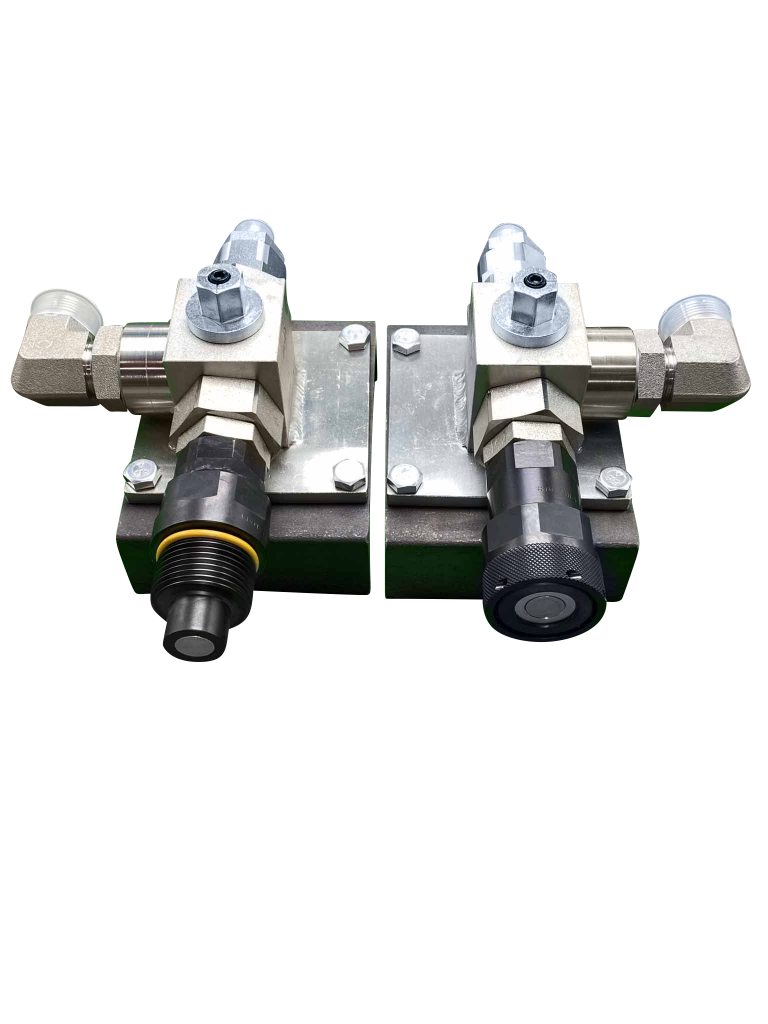
This is especially useful when older equipment is being pushed into heavier work than it was originally set up to handle. Instead of only replacing the couplers, the retrofit can improve the way the machine connects, routes, and manages hydraulic flow.
Consider a Diverter Valve for Thumb and Attachment Use
A hydraulic diverter valve may also make sense when the operator needs to switch between a thumb and another hydraulic attachment without repeatedly disconnecting and reconnecting hoses.
This type of upgrade is especially relevant for excavators and backhoes, where the thumb may stay installed while the operator also needs to run other attachments. Instead of swapping hoses each time, the diverter valve routes hydraulic flow between functions.
That can help reduce downtime, limit unnecessary connection events, and reduce exposure to contamination during daily operation. Stucchi’s free Guide to Auxiliary Hydraulic Solutions explains how diverter valve systems help operators run multiple attachments from one auxiliary line without constant hose changes.
For a retrofit blog, this is an important point: sometimes the best way to modernize older equipment is not just replacing the quick disconnects. It may be rethinking the whole auxiliary hydraulic setup so the machine works better with today’s attachments.
Decide Whether You Need Adapters, Conversion Kits, or Custom Support
Some retrofit projects are straightforward. The old couplers are removed, the correct flat-face quick disconnects are installed, and both mating halves are replaced so the connection works cleanly.
Other projects need more review. Older machines may have unusual thread types, limited mounting space, mixed coupler brands, worn adapters, or attachment circuits that have been changed over time.
A retrofit may require:
- New male and female flat-face couplers
- Thread adapters
- Hose-end changes
- A different coupler body size
- Connect-under-pressure capability
- Threaded flat-face couplers for severe-duty use
- Auxiliary hydraulic kits
- A diverter valve for thumb and attachment control
- A custom interface for non-standard equipment
When standard parts do not fully solve the problem, Stucchi’s custom hydraulic solutions can support applications with unique layouts, fluids, operating conditions, or connection requirements.
Replace Both Coupler Halves When Compatibility Is Unclear
On older equipment, replacing only one side of the connection can create problems if the mating coupler is worn, damaged, non-standard, or not truly compatible. A coupler may connect and still leak, restrict flow, disconnect poorly, or wear prematurely.
For the cleanest retrofit, replace both mating halves when possible. This provides the machine and attachment with a matched connection interface and reduces the risk of combining new flat-face quick disconnects with older, worn components.
This is also a good time to inspect hoses, adapters, dust caps, plugs, and mounting points. A new coupler cannot solve every hydraulic issue if the surrounding components are damaged, undersized, or poorly matched to the application.
Standardize Mixed Fleets Where Possible
Many older fleets include different brands, model years, attachment styles, and hydraulic connection types. That creates extra work for operators and maintenance teams because each machine may need different couplers, adapters, or hookup routines.
Retrofitting with modern flat-face quick disconnects can help standardize the connection strategy across machines and attachments. Standardization makes it easier to train operators, stock replacement parts, reduce hookup errors, and move attachments between compatible machines.

This is useful for contractors, municipalities, rental fleets, agricultural operations, snow removal teams, and industrial crews that rely on multiple machines and frequent attachment changes. Learn more about Standard Operating Procedures for operators and fleet managers to ensure reliable, leak-free hydraulic connections – on paper and in practice.
Test the Retrofit in Real Operating Conditions
After the retrofit is complete, the connection should be tested under the same conditions the equipment sees in the field. A basic leak check matters, but it is not the whole test.
Operators should confirm:
- The couplers connect and disconnect cleanly
- The attachment receives proper flow
- The couplers do not leak under operating pressure
- The system does not generate unusual heat
- The attachment responds normally
- Residual pressure does not prevent reconnection
- Dust caps and plugs fit correctly
- The connection stays secure during operation
If the machine runs high-flow attachments, severe-duty tools, or pressure-sensitive circuits, the retrofit should be reviewed more carefully before the equipment returns to full operation.
Retrofitting older equipment with modern flat-face quick disconnects can improve cleanliness, connection reliability, attachment changes, and hydraulic system performance when the full application is reviewed. For some machines, the right solution may include new couplers, adapters, auxiliary hydraulic kits, a diverter valve, or a custom connection strategy. Contact Stucchi to review your equipment, attachment requirements, and retrofit goals.
