

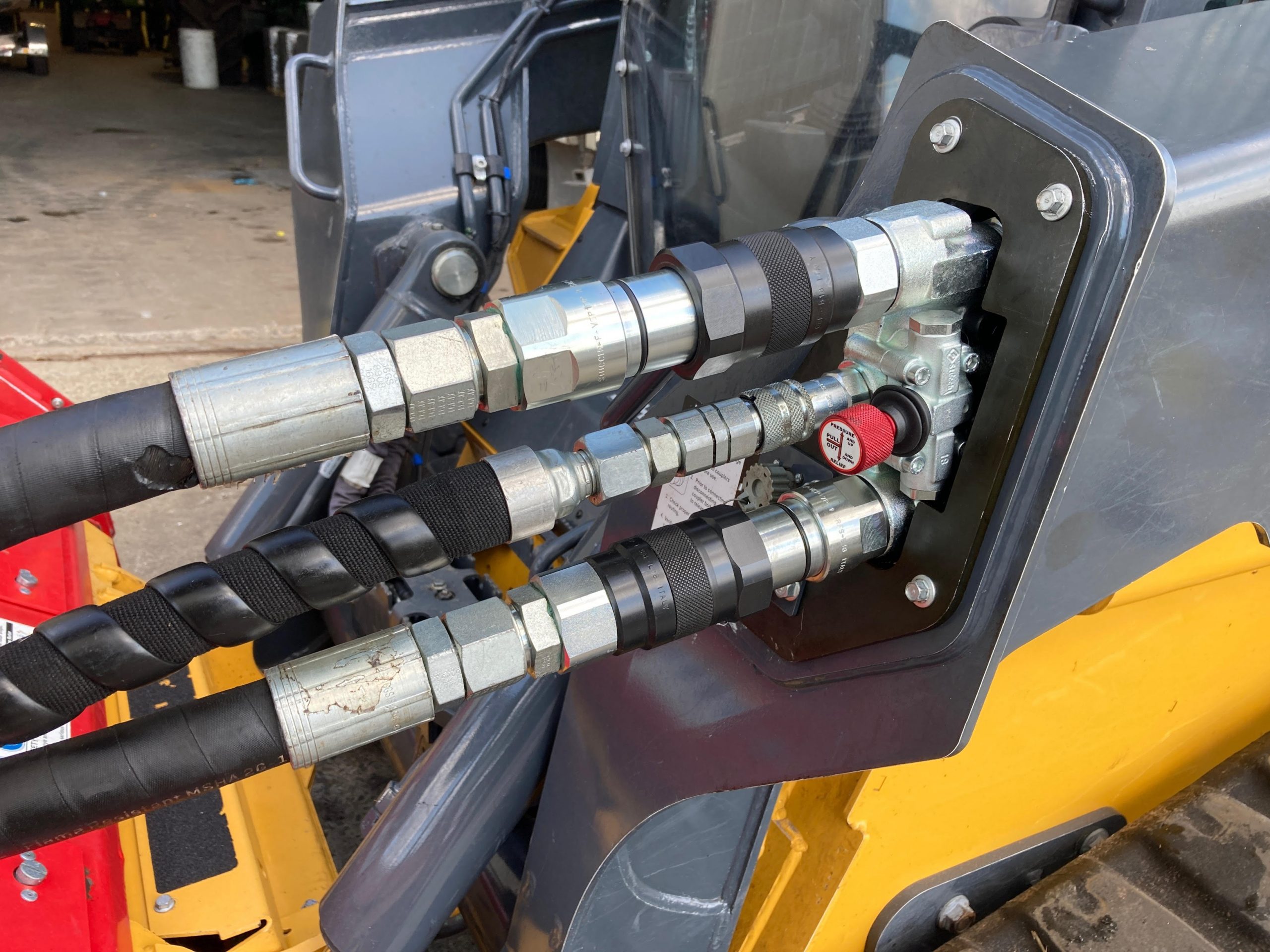
How to Choose the Right Hydraulic Quick Coupler
Choosing the right hydraulic quick coupler involves much more than matching a port size or replacing a part that looks similar. Flow, pressure, temperature, materials, operating conditions, interchangeability, and residual pressure can all affect performance.
In this episode of In Good Company: Where Relationships Drive Results, host Lisa Kilrea sits down with Jay Prins of Stucchi USA to break down how to select and troubleshoot hydraulic quick couplers for real-world applications.
Jay explains the STAMP method—Size, Temperature, Application, Materials and Medium, and Pressure—and how buyers can use it to evaluate a coupling application from the beginning. He also discusses flat face hydraulic quick couplings, ISO 16028 interchangeability, Connect Under Pressure solutions, heavy-duty applications, flow and pressure drop, material selection, and troubleshooting common connection problems.
The conversation goes beyond specifications to examine what happens in the field when an attachment won’t reconnect, a coupling begins leaking, residual pressure builds inside a hydraulic line, or different machines and attachments need to work together.
Here’s a glimpse of what you’ll learn:
🔹 02:02 — How to use the STAMP method when selecting a hydraulic quick coupler
🔹 03:38 — What to consider when choosing flat face couplings for skid steer attachments
🔹 06:28 — Why ISO 16028 matters for interchangeability between machines and attachments
🔹 10:59 — How to diagnose hydraulic coupler leaks and identify the root cause
🔹 14:07 — Why residual pressure can prevent an attachment from reconnecting
🔹 15:37 — When a Connect Under Pressure solution should be considered
🔹 18:31 — How flow requirements and pressure drop affect hydraulic quick disconnect sizing
🔹 23:53 — How to maintain interchangeability across mixed equipment and attachment brands
🔹 25:27 — How Stucchi approached a demanding bridge demolition application involving multiple attachments
🔹 38:45 — Why hydraulic quick couplers should be treated as important system components rather than accessories