




Table of Contents
How Can Operators and Fleets Prevent Hydraulic Leaks During Quick Connect?
Quick answer:
Hydraulic leaks during quick-connects are usually caused by inconsistent connection procedures, trapped pressure, contaminated interfaces, or couplers not designed for zero-spill operation. Operators and fleet managers can significantly reduce, and in many cases eliminate, these leaks by following standardized operating procedures (SOPs) that address pressure relief, connection sequencing, cleanliness, and proper use of flat-face, non-spill coupling technology.
This guide explains the practical procedures operators can follow to prevent oil leaks during attachment changes, outlines a repeatable zero-spill checklist for fleet environments, and shows how SOPs can be aligned with specific equipment platforms and OEM requirements. You’ll also learn where standardized procedures end, and where application-specific engineering support helps fleets achieve cleaner connections, safer operation, and stronger contamination control across different machines and brands.
Operator SOP Checklist: Preventing Hydraulic Quick Connect Leaks (Zero-Spill)
Quick Checklist Summary (for Operators):
Operators can prevent hydraulic quick-connect leaks by relieving pressure before disconnecting, cleaning coupler faces, capping immediately after separation, and reconnecting only clean, depressurized connections. Consistent execution of these steps reduces fluid loss, improves safety, and supports contamination control at the connection interface.
Zero-Spill Hydraulic Quick Connect Checklist
- Relieve system pressure before disconnecting
Shut down the machine and cycle all hydraulic controls to release residual pressure. Never disconnect a pressurized line. - Clean coupler faces prior to separation
Wipe both coupler halves with a clean, lint-free cloth to remove dirt, moisture, or debris that could enter the system. 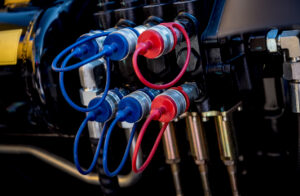 Disconnect slowly and deliberately
Release the coupler smoothly. If resistance is felt, stop and confirm pressure has been fully relieved. Do not force the connection.- Cap both sides immediately after disconnecting
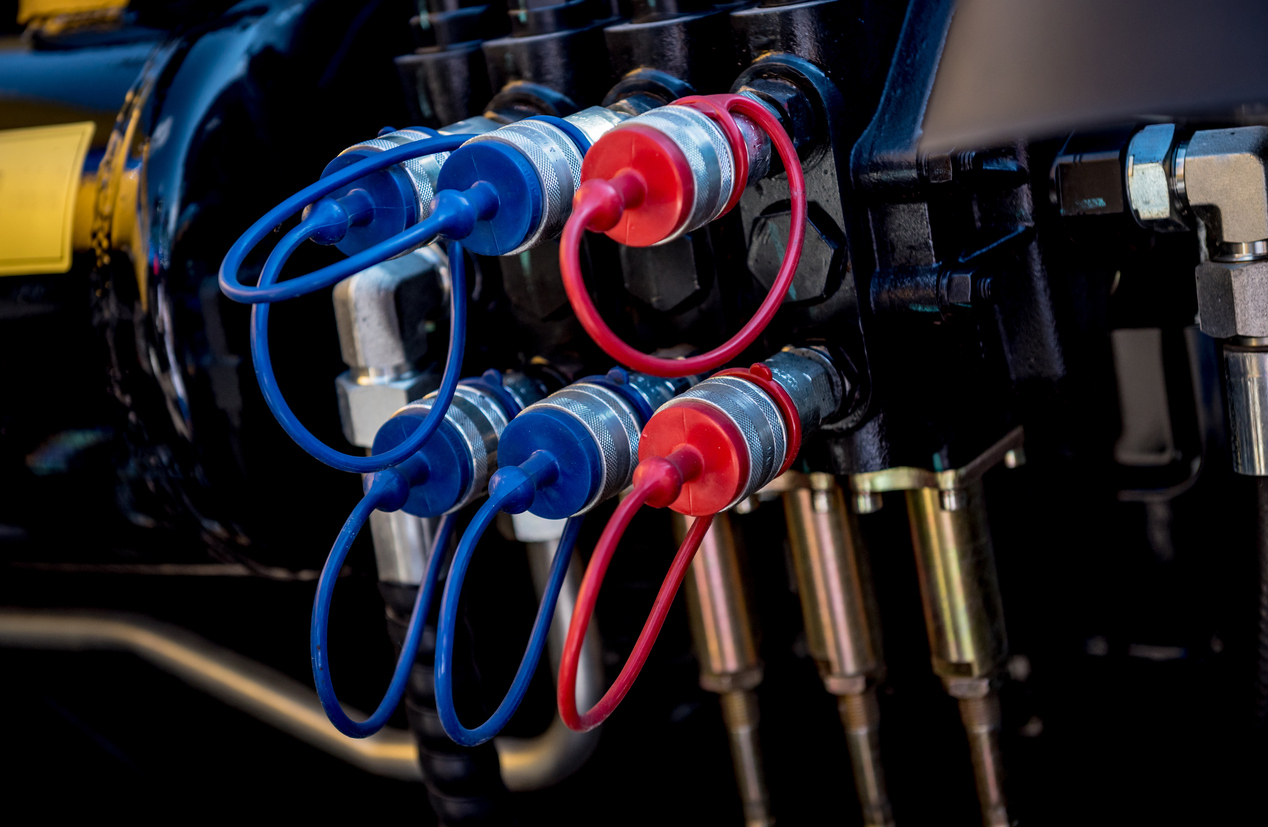
Install dust caps or plugs on the male and female coupler halves to seal exposed interfaces and prevent any residual oil from escaping. - Store hoses and attachments off the ground
Secure capped hoses in designated brackets or holders to prevent contamination during transport or idle periods. - Clean again before reconnecting
Even capped couplers should be wiped clean before reconnection to ensure sealing surfaces remain contamination-free. - Reconnect using proper alignment and sequence
Align couplers carefully and connect without force. For multi-line systems, follow the recommended connection order or use a multi-coupling plate to ensure all circuits seat evenly.
Operator Result:
Following this checklist minimizes oil drips, prevents pressure-related sprays, protects sealing surfaces, and reduces contamination entering the hydraulic system during routine attachment changes.
Fleet Manager SOP Checklist: Engineering Zero-Spill Across a Fleet
Quick Checklist Summary (for Fleet Managers):
Fleet managers enable zero-spill hydraulic quick-connect performance by standardizing coupler selection, specifying pressure-management solutions, enforcing operator SOPs, and aligning connection hardware across brands and attachments. System-level consistency is the foundation of long-term contamination control.
Zero-Spill Hydraulic Quick Connect Checklist (Fleet & Equipment Managers)
- Standardize flat-face, non-spill couplers across the fleet
Specify flat-face hydraulic quick couplers to minimize fluid loss during connection and disconnection and reduce ingress of contaminants at the interface. - Specify connect-under-pressure capability where needed
Equip machines and attachments with connect-under-pressure couplers or pressure-relief solutions to prevent forced connections, oil sprays, and downtime caused by trapped pressure.  Align coupler interfaces across brands and attachments
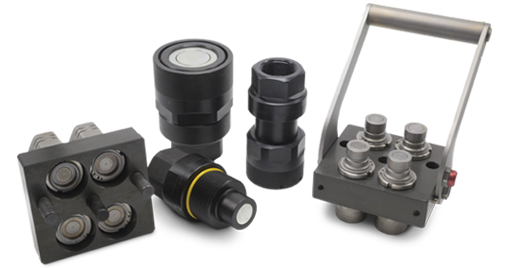
Ensure hydraulic connections are compatible across mixed OEM fleets (e.g., loaders, skid steers, attachments) to prevent field substitutions, mismatched couplers, or improvised fixes that create leaks.- Use multi-coupling plates for multi-line applications
For attachments requiring multiple hydraulic and electrical connections, specify multi-coupling systems to eliminate partial connections, misrouting, and spill-prone individual hookups. - Mandate dust caps and retention methods
Specify tethered or retained dust caps as standard equipment on all quick-connects to ensure consistent use and reduce exposure to contamination during transport and storage. - Formalize operator SOPs and training
Document and enforce standardized connection and disconnection procedures to reduce variability across operators and shifts, improving reliability and safety outcomes. - Audit leak sources and connection performance
Track recurring leak points, pressure-related connection failures, and contamination-related service events to guide specification improvements and hardware standardization.
Fleet Result:
Standardized connection hardware and procedures reduce oil loss, protect hydraulic cleanliness, simplify training, and improve uptime across mixed fleets and operating environments.
How Operator SOPs and Fleet Standards Work Together to Prevent Contamination
Zero-spill performance does not come from hardware alone, and it does not come from operator behavior in isolation. It is achieved when fleet-level standards and operator procedures are engineered to work together.
Operators control what happens at the moment of connection and disconnection. Fleet managers control the system conditions that enable clean, spill-free, quick-connect processes. When either side is misaligned, such as mixing coupler styles, allowing incompatible interfaces across attachments, or relying on improvised pressure relief, leaks, contamination ingress, and downtime become inevitable.
Effective contamination control begins upstream with consistent specification:
- Flat-face couplers selected for the application
- Connect-under-pressure capability, where residual pressure is common
- Multi-coupling systems for complex, multi-line attachments
- Dust caps and retention methods are specified as standard equipment
Operator SOPs then execute against that engineered baseline. When couplers are compatible, pressure is managed by design, and connection hardware is standardized, operators can follow clean, repeatable procedures without workarounds. This alignment reduces oil loss, prevents debris ingress, and protects sealing surfaces at the most vulnerable point in the hydraulic circuit, the connection interface.
From a contamination control standpoint, this integration is critical. Contaminants introduced during a single poor connection event can recirculate throughout the system, accelerating wear and undermining filtration performance. By aligning fleet standards with operator procedures, contamination prevention shifts from reactive maintenance to proactive system design.
This system-level approach is where zero-spill performance becomes consistent, scalable, and measurable across mixed fleets, environments, and OEM platforms.
Addressing Brand-Specific Differences Without Compromising Zero-Spill Performance
Standard operating procedures often assume that hydraulic connections behave consistently across machines and attachments. In real-world fleets, that’s rarely the case. Mixed OEM equipment, rented machines, and third-party attachments frequently introduce different coupler series, pressure behaviors, and connection geometries, all of which can undermine even well-written SOPs.
Operators may follow every required step—depressurizing lines, cleaning coupling faces, capping ports—yet still experience leaks, connection resistance, or residual pressure issues simply because the interfaces were never designed to work together. This is especially common in multi-function excavators and high-utilization fleets where attachments are shared across owned and rented equipment.
A clear example of this challenge, and how it can be solved, is outlined in Stucchi’s Bridge Demolition Case Study, where complete interchangeability was required across a multi-function excavator, rented equipment, and multiple hydraulic attachments. In that application, Stucchi’s quick coupling specialist worked directly with both the contractor and the equipment supplier to troubleshoot connection inconsistencies and engineer a solution that ensured reliable, leak-free interchangeability across all machines and tools.
The takeaway for operators and fleet managers is important: when zero-spill performance breaks down across brands or attachment mixes, the issue is rarely procedural discipline; it’s interface alignment. SOPs remain critical, but they must be supported by connection systems designed for cross-brand compatibility, pressure management, and repeatable performance.
When Standard Operating Procedures Aren’t Enough: Application-Specific Zero-Spill Design
 There are situations where even the best SOPs reach their limits. High residual pressure, frequent attachment changes, multi-line circuits, thermal expansion, or demanding duty cycles can create conditions in which procedural controls alone cannot guarantee zero-spill performance.
In these cases, zero-spill reliability must be engineered into the connection system itself. That means evaluating how pressure behaves during disconnect, how interfaces align under load, how many circuits are connected simultaneously, and how attachments move between machines, operators, and operating environments.
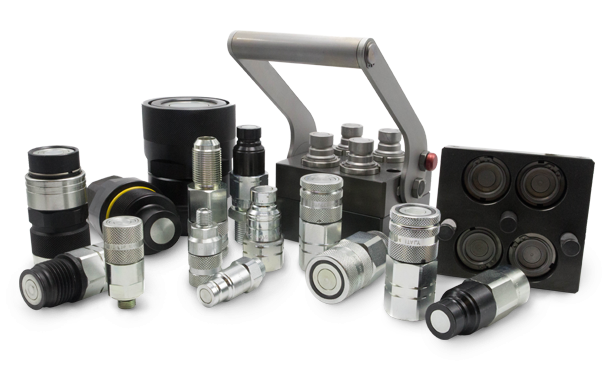
This is where application-specific design becomes essential. Instead of asking operators to compensate for hardware limitations, the hydraulic connection system is specified to support clean, repeatable connections under real operating conditions. That may involve selecting flat-face couplers suited to the application, integrating connect-under-pressure capability, standardizing interfaces across brands, or implementing multi-coupling systems that eliminate variability at the point of connection.
Stucchi approaches these challenges from a system-level perspective, working with OEMs, dealers, and fleet operators to align procedures, equipment, and connection technology into a cohesive zero-spill strategy. The goal is not just fewer leaks during connection, but also predictable performance across machines, attachments, and operators throughout the equipment’s life.
When SOPs are supported by engineered connection solutions, zero-spill operation becomes a repeatable outcome rather than a best-case scenario. Contact Stucchi’s Technical Help Desk for specific hydraulic solutions.
Stucchi engineers hydraulic connection solutions that help operators, fleet managers, and OEMs achieve reliable zero-spill performance across demanding applications. Our flat-face quick couplers, connect-under-pressure technology, and system-level engineering support work together to reduce leaks, improve safety, and maintain contamination control. Contact Stucchi to develop a hydraulic connection strategy built for a zero-spill quick connect.
